Tag: Acque & Terre

  • The stalemate in the Doha Development Agenda negotiations

    The stalemate in the Doha Development Agenda negotiations

    The complex negotiations of the so-called Doha Development Agenda (DDA) seem to have definitively ground to halt at the end of July. Not that progress in the negotiations had ever been particularly fast since 2 November 2001, when they were launched in the Qatar capital. It can hardly be claimed that optimism had ever prevailed over pessimism in the experts assessments throughout this period: the skies over Doha were always decidedly grey and many observers felt that finding a solution to these negotiations was rather like squaring the circle. There are too many conflicting interests, too many chapters still open, and not enough goodwill on the part of the main actors.

    Given the importance for the whole world economy of a successful outcome to the negotiations, there was still hope that a virtuous circle could be set in motion by some concessions made – or least announced – by the big members of World Trade Council (WTO), like the European Union or the United States,thus inducing other members to move away from their initial positions.

    A development of this kind had been expected and called for over the last five years. But at present a reverse trend seems to prevail. The initial positions have been consolidated and this has led to stalemate.

    In 1994, the Uruguay Round ended with the creation of the WTO, a very important new development not only for international trade but also for the whole system of international relations.

    In fact replacing the existing General Agreement on Trade and Tariffs (GATT), no longer a treaty, but a full-bodied organisation with coercive powers, thanks to the existence of a system for settling disputes between members ensuring the rules are respected, turned out to be a step forward of great importance for international governance.

    Despite the considerable criticism levelled at the WTO, especially from the South of the world and the ‘alterglobal movements, I believe we can objectively claim that progress was actually made and that an international organisation has shown it can make regulations and have them respected. The problem is thus not to reduce the WTO’s powers, as many rather unthinkingly claim, but to flank the WTO’s powers in the trade world with similar powers for multilateral organisations in other fields, such as the environment, social affairs, and energy, in which at present international conventions combine great ambitions with little power.

    For example, the United Nations can be widely criticised, but normally this is done on account of its ineffectualness. There can be no doubt that if, in the field of collective security, the United Nations had the same kind of powers created by the WTO, there would be much more chance for peace in the world than with a system still granting some members the right to veto.

    Contrary to what is often claimed, the problem is not to have less WTO but rather to have more. In-depth studies have shown that the WTO method for settling disputes is much fairer than is normally believed. Far from being biased in favour of the more powerful countries, it is a thoroughgoing system of rules. Over the years it has worked in favour of more influential members, like the USA and EU, but often it has also favoured other members, opposed to
    them.

    The jurisprudence of the WTO panel is full of cases won by developing countries over developed countries, and this proves that despite everything in the WTO the rules prevail over the identity of the litigants.

    It is thus unfair to describe the WTO as an organisation at the service of the leading players in global trade used to keep all the others in line – a kind of steam roller for globalisation, blind and deaf to the problems of the world.

    If anything, the current outlook of the WTO, and it is reflected in the Doha Round, is not so much to balance the way in which disputes are settled, but to define rules encouraging a greater opening up of markets to products from developing countries, especially in the sector of agriculture.

    This is the significance of the DDA, and the starting point for analysing the current stalemate.

    Like the previous rounds, the Uruguay Round focused on the aspects underlying the creation of GATT: a reduction in industrial tariffs (and duties). This process is almost complete, at least as far as the developed countries are concerned.
    They have, however, kept some ‘tariff peaks’ and resort to so-called ‘tariff escalation’ for some products imported from developing countries, and these two exceptions tend to dilute the effects of the almost total abolition of duties.

    Making the further reduction in tariffs established by the Uruguay Round acceptable to other WTO members required a reform (beginning in 2000) of the rules on agricultural and services trade, still only in their infancy at the time, especially when compared to other tariff reductions. For many developing countries, the revenue from duty on imported products was a primary source of fiscal income. An indiscriminate reduction in the duties would thus be a serious threat to state budgets and it should be offset by greater opportunities for national products on the markets of developed countries. In the absence of this kind of incentive, it is very difficult to propose speeding up the tariff reduction process to a developing country.

    In the case of industrial duties (in WTO jargon NAMA, Non Agricultural Market Access) the commitments made in multilateral contexts concern the so-called bound duties’, normally higher than those actually applied. A WTO member pledges a gradual reduction in duties on most products according to a established schedule (slower for developing countries), but is free to reduce them further following internal trade liberalisation plans (which was the rule almost everywhere in the 1990s).

    Emerging countries like India and Brazil, notoriously little inclined to make significant commitments at multilateral level, and which still have duties above the average, can, however, count on a considerable spread between bound rates and applied rates. This means they could fairly easily introduce further reductions in rates.

    As we said, the reform of the agricultural and service regimes was to have begun in 2000.

    Even before then, the USA and especially the EU had suggested accompanying the revision of the rules with negotiations on other products, to broaden the scope of the negotiations: multilateral rules on investments, competition, and government procurement were seen as indispensable, given the strong correlation between these phenomena and trade (over a fourth of world trade depends on direct investments).

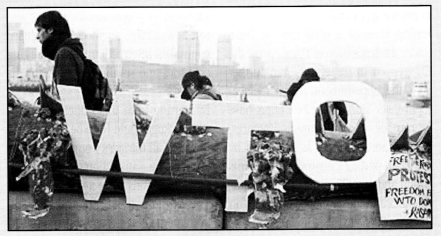
    At that time there was talk of the so-called Millennium Round, which disastrously ran aground at Seattle in 2000, when for the first time the WTO became the subject of front page reports because of the mobilisation of nongovernment organisations from many parts of the world protesting against the widening of the trade agenda.

    The idea behind the protests was to focus world attention on what was seen as a method for rich countries and international technocrats to impose oppressive rules on poorer countries.

    The failure of the Seattle conference was not only a key moment for strengthening the ‘alterglobal’ movements, for which the WTO had become a traditional enemy. It also marked the end of a period in which the big powers, i.e. the USA and the EU, representing forty per cent of world trade, could impose their will on the rules being drafted.

    Since Seattle, the transversal alliance between countries in the South and activists in the North has made this dimension utopian, and reaching agreement in the WTO has now become much more complex than it was at the time of the Uruguay Round.

    In November 2001 the launching of the Doha Development Agenda was possible only for two reasons: the negotiations were given the priority objective of defining rules aimed at encouraging greater involvement of developing countries in world trade (hence the name) and the aftermath of 9/11 played in favour of this agreement: the new round of trade negotiations was the first great opportunity to introduce more democracy to the world, and make the distribution of resources less unfair (presupposing that international terrorism was really driven by economic injustice, which is far from having been demonstrated).

    There were, however, many still unsolved issues at Doha. While at Seattle the aim was to define the parameters for the final agreement of the Round, at Doha there has been a much more modest move to define the starting point for negotiations, postponing the decision on the inclusion or not on the agenda of the so-called Singapore Issues: Investments, Competition, Government Procurement and Trade Facilitation. The EU attaches particular importance to these topics, partly to attenuate the possible impact of the forced opening up of itssown o agricultural markets.

    At Cancún in September 2003, a conference originally conceived as an intermediary stage towards the completion of the Round, expected by late 2005, discussions were very heated. Under the leadership of Brazil and India, the new G20 group brought together developing or emerging countries interested in opening up agricultural trade, objectively lagging behind in terms of liberalisation compared to industrial production. They then managed to impose their own line, whereby DDA was primarily to be an agricultural negotiation.

    Only one of the Singapore Issues (the trade facilitation measures) has stayed on the agenda, while the others were excluded. Since Cancún it has become obvious that with the waning of the EUUS’s powers of persuasion, highlighted at Seattle, there is now a greater scope for aggregation for developing countries. Thus for example, we have the G20, whose leading members are India, Brazil and South Africa and which is still primarily an agricultural alliance, but also the G90, bringing together the poorer countries which still can’t be described as ’emerging’.

    The WTO negotiations are being played out on a very complex multi-dimensional chessboard, involving frequent mini-ministerial meetings (with key members – the EU, USA, Brazil, India and Australia, as well as the WTO Director General and ‘negotiations facilitator’, initially Supachai Panitchpakdi from Thailand, and now the Frenchman Pascal Lamy, former European Commissioner for Trade).
    The situation has been further complicated by complex exercises in co-ordination involving the various regional groups and lobbies, in an overall structure with extremely sophisticated variable geometry. At the WTO, an organisation governing very concrete economic interests, the alliances are neither fixed nor ideological, butvariable and a function of the interests at stake in each specific issue.

    Thus to speak of all-embracing strategic alliances in the WTO is completely wide of the mark. On certain issues, the USA and the EU can agree (reduction of industrial tariffs in emerging countries and rules on industrial property rights) while on others the EU is far from American positions and nearer to the position of some developing countries (such as products with geographical indications and caution on agricultural reform) but not on others (the elimination of subsidies for farmers). And so on. As we said the ‘chessboard’ has become increasingly complicated thus leading to the arguably inevitable stalemate.

    Although the negotiations seemed to have been proclaimed dead at various time in the five-year period, on several occasions hopes were actually rekindled. Such as in July 2004, when the so called Geneva Framework Agreement appeared to provide a platform for re-launching the negotiations.

    We can say that since the beginning of this year, the emphasis on the agricultural chapter had meant that the greatest pressure was on the EU, which pays the highest subsidies to its own farmers.

    The fact that the EU is at the same time the most generous in terms of opening up its own market to products from less developed countries (the seventy Least Developed Countries, whose products enter with no duties apart from the controversial exceptions of rice, sugar and coffee – products of enormous importance for LDC exporters) and that Brussels has proposed a zero cost cycle for the poorest countries (which would not be a required to make concessions), and also the definitive abolition of distorting subsidies onon exports, has gradually shifted the pressure onto the USA, which has seemed unable, however, in the five years, to provide practical proposals reflecting their frequent free-market pronunciations.

    Since 2001, preoccupied with a very different international agenda, the USA has given the impression of not attaching much importance to these negotiations. Even its surprisingly active approach to a bilateral trade agreements – conceived as a prize for more reasonable partners rather than real weddings of interest between equals – and the recent replacement of the chief negotiator (the US Trade Representative) Robert Portman with Susan Schwab would seem to suggest that Washington doesn’t believe in the feasibility of the Doha negotiations. Moreover, the Trade Promotion Authority, allowing President Bush to sign international trade agreements without the ratification of the Senate, will expire in March 2007, and he seems unable, or doesn’t even want, to ask for an extension.

    Having invested a good deal at Doha under the leadership of Pacal Lamy, the EU stepped up its efforts even further after the appointment of his replacement Peter Mandelson. New offers have been made on agriculture and services, but they are stillviewed as too modest by the main partners: Australia, the Cairns Group and the G20 as regards agriculture; India and the developed countries on the subject of services.

    The two key emerging countries, India and Brazil are in a very special position.
    Their strategic influence within the WTO is much greater than their effective trade power. This due to theircapacity to lead the rest of the developing world and the acknowledged skill of their negotiators, among the best in the world (the WTO negotiations require extraordinary technical competence, and every week dozens of pages of extremely complex proposals have to be studied, analysed and answered).

    Here we are talking of large emerging economies, but full of contradictions. They are competitive in certain sectors (agriculture in Brazil, and services in India), but lag behind in others. These countries have both gradually reduced their duties, which, however, are still higher than the world average.

    Having recently joined the WTO, China has decided not to play an active role, keeping out of the fray and monitoring the negotiations from a distance. China is in no hurry to exercise all of its huge potential, aware that it could further upset the already precarious balances.

    Since the Hong Kong Ministerial Conference (December 2005) it has been increasingly clear that such a complex negotiation could not have been concluded through unilateral offers or efforts by one of the sides. Rather a concerted effort is required in which all the various countries are asked to make sacrifices in proportion to their economic power: large sacrifices for developed countries, intermediary for emerging countries and small or nothing for the poorest.

    By starting from this principle, a winwin package could have been identified in which all the sides would haven been given some satisfaction, thus making the negotiations more attractive.

    This virtuous trend, however, has still not emerged. At the time of the breakdown of negotiations, only a few days after the St Petersburg G7 summit had called for their completion, we can sum up and suggest that the successful solution should come from the combination of a new American proposal to reduce its own internal subsidies to farmers (which strongly influence world prices) and a further European proposal to reduce their own agricultural tariff peaks (the exceptionally high duties on some sensitive products like milk and meat) and a significant reduction in industrial tariffs by Brazil and India.

    If all this happened, it could trigger of the virtuous cycle called for by everyone, beginning with the more ambitious proposals for the liberalisation of services. At Hong Kong it was decided that agreement could only reached sector by sector and be ‘plurilateral’, and therefore not include all WTO members (developing countries are not generally inclined to open up their service sector to international competition), but only those actually interested.

    Once the big issues have been solved, the new climate could probably lead to the signing of agreements in other fields, such as the definition of measures for simplifying customs procedures (‘trade facilitation’), more transparent shared rules on anti-dumping, the setting up of a multilateral register for the geographical indications of products and so on, all
    liable to have positive effects on trade.

    But this will probably not happen, at least not in the near future. Everyone expects their neighbour to make the first move, and in this way nobody moves.

    Despite the international instability due to terrorism and the rising prices of raw materials, the international economy is enjoying growth, and this has possibly weakened the arguments of those who consider a success at the WTO negotiations to be indispensable.

    Moreover, the new complexity of international relations, especially economic relations, in the light of the emergence of the Asian countries and the new variable geometries dominating the WTO suggests that the pause for reflection will be salutary. If the negotiations were to be completed today, the result would be a minor agreement, ultimately of no interest to anyone.

    One player who could suffer most, from the point of view of the system rather than economically, is the EU. It draws its international strength above all from its economic and trade influence, where it has clear and proven competence. Hence the importance the EU attaches to strengthening the WTO multilateral system, in which it is a great protagonist.
    Any weakening of the multilateral trade system – as is currently emerging – implies less influence for the EU in an area in which it has been particularly strong.

    The challenge for the EU after Doha will be to adapt its trade diplomacy to a situation in which bilateral and regional agreements will prevail, thus creating what some have described as the ‘spaghetti bowl’: an enormous number of preferential agreements, incredibly complex to understand and manage.

    Keen to extend strong multilateral rules, the EU will not necessarily be penalised by this new situation but it will have to negotiate with greater flexibility (different agreements for different partners – not always easy for the complex European negotiation machinery involving the Council, Commission, Parliament and national political sensibilities, not to mention the increasingly powerful network of civil society).

    Paradoxically those who will suffer most from the failure of Doha will be those who should have been the main beneficiaries: the less developed countries. In a complex network of bilateral agreements, who will bother negotiating with them? The emerging economies attract the interest of everyone, those less developed of very few.

    Those in the world of social activism, jubilant at the ‘defeat of the WTO’, could do well to ponder this paradox.
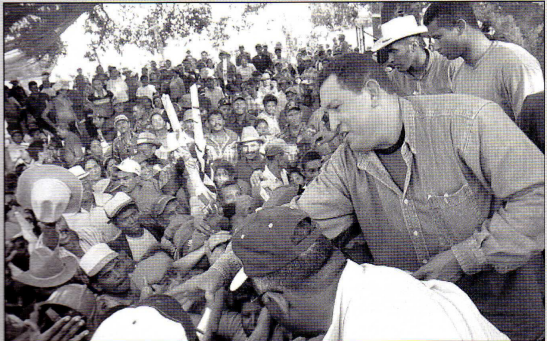

  • New political trends in Latin America: a real shift to the left?

    New political trends in Latin America: a real shift to the left?

    At present there is a good deal of talk about a supposed ongoing shift to the left in Latin America. The remarkable coincidence of twelve presidential elections being held in the period from December 2005 to December 2006, not to mention many legislative elections, tends to corroborate the importance of the change, which could effectively radically shift Latin America to the left, especially if there is a swing that way in Mexico and Brazil.

    There are several factors apparently adding up to a very significant political change: the recent elections results in Bolivia and Chile, the possible election of the populist Ollanta Humala in Peru, the consolidation of Nestor Kirchner’s position in Argentina, Chávez’s growing influence throughout the subcontinent, the possible success of Lopez Obrador at the head of the PRD in Mexico, and the probable re-election of Lula in Brazil, despite the via crucis his Workers’ Party (PT) has undergone.

    In this article we will analyse the similarities and differences in the various situations, seeking to understand if there is really a precise trend in Latin America, or if we are simply witnessing a phenomenon due to the electoral coincidence.

    Everything began with the historic election of Lula in 2002. This was the first time that the historic left rose to power in the largest Latin American country – Brazil.

    That election was hailed as marking an epoch-making turning point for Brazil and Latin America. After the former union leader had been elected at the first round, the contagious enthusiasm affecting Brazil soon spread to the rest of the world, especially Europe, where the advent of Lula was greeted with – to my mind -rather rash expectations.

    While the figure of the patient Lula – elected president at his fourth stab – was being feted, most commentators tended to neglect or even deride the legacy from Fernando Henrique Cardoso’s two terms in office. Those years were hastily written off as a failure. But in actual fact they were a key transition period in Brazilian history. Cardoso’s administration was the first Brazilian government capable of balancing the books, modernising the economy, and boosting growth.

    Cardoso’s legacy has emerged clearly in the Lula years: a financially sound and competitive Brazil is acquiring growing stature on the international economic scene. Without Cardoso’s economic austerity, the conditions for Lula’s election would never have been in place. Some observers, however, simplistically tend to attribute the new president with magical powers. Lula is said to have redistributed wealth, eliminated illiteracy and poverty, and changed the course of history for ever.

    Clearly the reforms introduced by Cardoso did not yield sufficiently significant results in the social field. But equally, moving the government’s focus for action towards the social world would have been impossible without economic austerity.

    Lula has always been aware of this and from the outset he was committed to respecting the agreements with the International Monetary Fund (IMF), subsequently not renewed.

    Large sections of the Brazilian left were disillusioned with Lula’s austere approach. He too was written off as being neoliberal, and there was fierce opposition in Brazil from the left during his
    term in office.

    The greatest disappointment came, however, with the crumbling of the PT, the party of the honest par excellence. It got caught up in a complex mesh of favours, corruption and connivance, reducing its prestige to an all-time low. Once in power the PT turned out to be just like all the other parties. Although the emphasis was shifted towards the social world, their policies did not break with liberal financial orthodoxy, as many both inside and outside Brazil had hoped. The farm reform did not make much progress compared to the previous period and the environment policy (i.e. for Amazonia) was sorely neglected. Some education and health programmes were implemented and then extended successfully. But the Big Bang many had dreamed of in Brazil just did not happen.

    With six months to go to the presidential elections, it seems Lula’s personal prestige will be enough to keep him in power. But his second term will be much more complex politically than his first, given that he will no longer have a solid parliamentary majority (this was the issue that gave rise to the scandals, especially the Mensalão scandal).

    Has Brazil really moved to the left over the past few years? The left has taken power for the first time, but its scope for action has been structurally limited by the lack of a strong coalition, the need to safeguard economic austerity, the disproportionate expectations created, and the extent of social problems requiring at least a generation of reforms to be solved and not only four years.

    Clearly Brazil has set an international benchmark. Lula’s presidency can certainly not be described as a failure while on the international scene the new Brazil has acquired a role unthinkable even a few years ago. Similarly, the new front of emerging countries is a powerful force in terms of international governance.

    The enthusiasm surrounding Lula in 2002 has now been echoed in Bolivia with the election of Evo Morales, the new niño bonito of the international left.

    This leader of the traditional producers of Bolivian coca is viewed favourably for several reasons: his ethnic origins, his sincere hard talk, his proven capacity to mobilise people, accounting for his electoral success, unprecedented in the complex Bolivian political history, and his ideas for exploiting the Bolivian energy resources for the benefit of the local population.

    Since the advent of democracy in Bolivia in 1982, no government has ever managed to give the country stability and implement the right economic and social reforms able to meet the needs of the population and solve the energy equation satisfactorily (see the Sanchez de Lozada crisis and the regional tensions threatening to implode the country).

    The crisis in traditional political forms of expression, a feature shared by many Latin American countries, has brought the historical parties to their knees, and encouraged the emergence of the platform of associations and movements, the MAS, which buoyed Morales to electoral success.

    We thus come to the first of the similar ongoing developments in Latin America: the traditional parties, expression of the ruling classes, are no longer able to offer convincing prospects. This has happened in Bolivia but also in Peru, where the election of Toledo coincided with the break-up of the traditional parties, except for the social-democratic APRA. It also happened in Venezuela, where Chávism has made the traditional parties irrelevant, but also in Argentina, where radicalism is undergoing a deep crisis and Peronism has split into a left-wing family (Kirchner) and a right-wing family (Duhalde). The phenomenon also partly emerged in Brazil, where the parties have never had strong organisations, except for the PT, but rather electoral cartels. Lula won more votes than his party. He thus was made president by an overall mobilisation that went well beyond the traditional PT electorate. This also happened in Uruguay, where Tabaré Vázquez’s Frente Amplio decreed the end of the traditional blanco-colorado bipolarism.

    In Chile the election of the socialist Michelle Bachelet seems to be an exception to the rule, because this is the fourth consecutive election of a representative from the Concertatión. In fact Chilean political history differs from the rest of Latin America, as does its recent economic history. Fifteen years of much higher growth rates than those recorded during the dictatorship, a wide consensus on economics and an open trade policy without precedent worldwide have created a situation in which the concept of left is associated with good economic results.

    No one, not even the Chile Communist Party, would now challenge these essential choices. Moreover, they created great difficulties for the right of Piñera and Lavín. A few years ago the rightwingers seemed bound to sweep to victory in this year’s elections after having finally laid the ghost of Pinochet for good.

    Although Chile is still a very classbound, socially imbalanced society, the right-left divide hinges more on approaches to the increasingly less urgent political past than any possible different conceptual visions in economics. The challenge for the new Chile government is to share the benefits in the economic growth wider rather than revolutionising the nature of growth. Many countries in Latin America would like to emulate this post-left challenge. Nestor Kirchner’s presidency in Argentina can in a certain sense be labelled as left, even if sui generis. He will almost certainly be re-elected in 2007, given the results in the recent legislative elections. His success is due to the return to institutional stability after a year with five presidents, sound economic growth (nine per cent annually since 2004, albeit following on from the great recession of 2002-2003), and well-managed negotiations with the international creditors. All of these successes were achieved without following the dictates of the International Monetary Fund (IMF).

    We must also add some bold choices, although partly steeped in populism, such as reopening court cases from the time of the military dictatorship, and a degree of economic nationalism, which, for example, has even created a crisis in Mercosur.

    So I am not sure we can really describe Kirchner as a left-wing president. But he is certainly an unconventional, personalist and populist president who has been able to achieve results, unthinkable even until recently. Moreover, most people have seen their living standards rise, a phenomenon which can hardly displease those who claim to be left wingers.

    Chávez’s Venezuela is often cited as an emblematic case of an alternative vision to traditional policies. The Chávez phenomenon is certainly very complex: his populist talk, his ability to reach the poorest sectors of the Venezuelan population and social programmes adopted on a continental-wide scale are certainly anti-establishment. His unbridled personalism, verbal incontinence and militarisation of the economy and politics have raised disquieting questions. Just how far can the Chávez model be replicated?

    The Bloque Regional de Poder, the new regional alliance suggested by Chávez as an alternative to traditional models of economic integration opens up interesting prospects for co-operation on energy, trade, and repeating best practices in successful social programmes. I would not go so far as to pompously describe this as the ‘Socialism of the 21st century’ as some do, but I don’t think anyone should be alarmed by the prospect of new forms of South-South international co-operation able to generate closer associations and new prospects.

    Of course so far Chávez has been able to rely on the oil manna, enabling him to fuel ambitious dreams and policies at home and elsewhere. Chavism may be interpreted as the latest disguise of Venezuelan oil-based populism. But the real litmus test is the wider distribution of the oil dividends among the population, and any assessments of this can only be made in the future.

    If Chávez is successful in this undertaking, I feel that labelling him left or right will be irrelevant. He will simply have achieved a remarkable political result.

    Similarly, a president diametrically opposed to Chávez and certainly no leftwinger, Alvaro Uribe, owes his popularity and his certain re-election to the results at times obtained with not wholly orthodox methods – in the struggle against narcoterrorism. Increased security in the Colombian streets, associated with discreet есоnomic results have created an undoubtedly solid platform, leaving little hope for his potential rivals.

    Chávez’s populist talk also features in the new phenomenon of Peruvian politics, Ollanta Humala. He seems to be the great favourite in the second round against the eternal candidate Alan Garcia, leader of the APRA.

    Ollanta Humala’s programme is fairly unclear, and so far he has only played on his populist message and charisma. His surprising success is once again down to a capacity to communicate with the masses who feel left out of the benefits of economic growth, which was fairly significant in the Toledo years.

    The first Andean president in the subcontinent, Toledo did not lived up to expectations because he failed to implement the necessary political reforms and draw up more effective social policies to the background of economic growth.

    Pending Mexican elections in July, when Lopez Obrador’s PRD could take the left to power for the first time (let’s hope the PRI militants don’t hear me, since this party has always claimed to be on the left or a least revolutionary…), what similarities are there between all the cases considered?

    The ‘lost decade’ of the 1980s was followed by an age of economic reform in the 1990s focused on balancing public accounts, privatisations, and the modernisation of the economy.

    These reforms were not equally successful in each country. Brazil and Mexico were strengthened in the 1990s and their main problem lay in the small social dividends (the very slow elimination of poverty) albeit within a fundamentally sound economic situation. On the other hand, the orthodох approach respecting the IMF recommendations in Argentina was not accompanied by suitable internal reforms. This led to a dramatic economic collapse from which the country only seems to be recovering now.

    Chile is the exception. The economic reforms introduced earlier than elsewhere and the open-market model meant that the solutions for social problems – although still insufficient – were managed much better than elsewhere.

    The Andean countries were less successful in their economic reforms. Peru obtained the best results, but Ecuador and Bolivia where beset by very complex institutional convulsions, and Venezuela lived off the income from oil. Columbia gave priority to solving the security problem, adopting a model of unilateral cooperation with the United States, making it a unique case in a region now characterised by strong economic nationalism.

    The macro-economic financial reforms (labelled as neoliberal by their denigrators) have been more or less successful according to the size of the specific economies. But then at the beginning of the decade the need to focus closer on social problems became more pressing in the whole region.

    The second-generation reforms go much further than the strictly economic dimension and concern key issues such as the distribution of wealth, healthcare, education, and the use of energy resources. In one way or another, the new generation of Latin American politicians tends to stress the social dimension of politics, without neglecting economic austerity but no longer attaching an almost religious value to the formulas of the Bretton Woods organisations.

    The new leaders tend to go beyond traditional party politics, in crisis everywhere, especially the left-wing parties, and develop a direct dialogue with the people. Often they become charismatic leaders with their own personal credibility, which is much more than the specific weight of the political areas supporting them.

    In the international field, the Latin American countries have overcome their traditional acquiescence to the United States, whose interest in the region, moreover, has waned drastically since 9/11. They now flaunt economic independence in the international context (the emergence of the G-20 bloc at the World Trade Organisation, the standstill of FTAA negotiations biased in favour of the North American countries, and redrafting the rules of the game for energy).

    Can all of this be described as being the outcome of left-wing policies? Once again what counts least are labels and generalisations. Latin America needed to tidy up its housekeeping and it did so at times painfully – in the 1990s. Then when the need to share out the benefits from economic growth more equally came forcefully to the fore, traditional politics was unable to manage this new dimension and was superseded by new, more direct and charismatic forms of political expression. At times this took place in the context of the old organised parties (e.g. Brazil and Argentina) but more often in new aggregations more in tune with popular sentiment. In the Andean countries, the new political phase has often assumed indigenist tones.

    What direction is Latin America moving in? Like the analysis of the phenomenon, the answer to this question cannot be unequivocal. We are certainly in the presence of processes forging new forms of conceiving and managing politics, verging on both populism and a new humanism. This approach to politics responds more effectively than the classic liberal model to the problems of the complex countries in Latin America.

    It is crucial, however, that this new humanism does not undermine the basic rules of economics. Growth is an indispensable premise for countries with a pyramid-shaped social structure like those in Latin America. The irresponsible approach leading to the debt crisis in the 1980s and generating greater poverty completely failed to alter the pyramid structure.

    Take, for example, the energy issue in Bolivia. This is no longer a question of ‘kicking out’ the foreign investors, indispensable both from the technological and financial points of view, but of renegotiating in a more balanced way the long-term agreements providing certainties for both sides and allowing for a more balanced distribution of the benefits of resources. This ‘left-wing’ objective should be in everyone’s interest, even that of the international companies.

    The world has changed greatly over the last decade. The emergence of new Asian economic powers is self-evident. Latin America is integrating into the new international balances in a more varied and certainly less forceful way. But the new developments in Latin America over the last few years could turn out to be very significant and create an example to be followed in other parts of the world.

  • The Congress’ surprise victory in the Indian elections

    The Congress’ surprise victory in the Indian elections

    “There are no prizes for guessing that the next election will see an easy victory for the
    coalition led by the BJP (Bharatiya Janata Party, the Indian People’s Party). The National Democratic Alliance (NDA), consisting of around twenty parties, but under the clear leadership of the Hindu Nationalist Party of Prime Minister Atal Bihar Vajpayee, will reap the benefits of five years of economic achievements, the growing wealth of the middle classes (the main pillar of the BJP), and the modernisation of the country’.

    That is what we wrote a few days ahead of the election in the article published in the last issue of this review.

    The only consolation for this slip-up is the fact that we are in good company: absolutely no one – either in India or outside – even went close to predicting the result. For that matter, nor did the winners, who hastily proceeded to draft a single program for the coalition to make up for the lack of one before the elections.

    But let’s begin with some figures: out of a total of 539 seats in the Lok Sabha (Lower Chamber) the Congress won 145 (compared to 114 in 1999) while the BIP’s share fell to 138 (182 in 1999). These figures highlight how the two main parties are far from being able to govern alone. Despite the fact India has the British first-past-the-post system, the proliferation of regionally based parties means that very broad coalitions must be formed: the NDA (National Democratic Alliance) led by the BJP is composed of twentyfour parties,while the United Progressive Alliance (UPA), formed by the Congress, has nineteen.

    This phenomenon is relatively recent: Nehru, and Indira and Rajiv Gandhi had always been able to count on comfortable absolute majorities, except in brief periods when Indira was forced to sit in the opposition because of the creation of a large coalition which had taken on board most of the other anti-Congress parties.

    In the 1999 elections, the BJP and its allies totalled 302 seats, whereas the Congress only had 137 (practically without allies) and the other parties (the so-called Third Front) had 100.

    The key to the unexpected success of the Congress lies here: having always dominated Indian politics, the Congress only began to suffer from an inability to make alliances in the 1990s, when it was thus isolated despite its nature as the only real nationwide single party. The BJP, on the other hand, is only rooted in the North, the Hindi-speaking area (more or less half the country), stood out for its ability to weave a network of relations to win votes in those states (South and East India), where the party had no base.

    The Sonia Gandhi’s great success caught all observers unawares. They had had little faith in her achieve her objective. But her success was in fact due to an ability to establish a series of alliances enabling the Congress to considerably increase the size of its parliamentary group without actually needing significantly more votes.

    But we must be careful about these figures: nationwide the Congress and its allies (NDA) obtained 35.19 per cent of the votes, the BJP and its allies 35.31 per cent, and other groups 27.58 per cent. In terms of seats, the Congress has a majority of 27.58 per cent. Moreover, the left-wing parties who reached a historic record of 56 seats have guaranteed their external backing for the NDA, as have other parties.

    The Congress’ parliamentary mandate is thus very solid: for the BJP, which did not actually lose votes, the defeat is even more stinging, because the traditionally reliable opinion polls in India had predicted they would chalk up over 300 seats.

    The geography of the elections is, however, very varied: the allies of the Congress, in this case the DMK, whitewashed the important state of Tamil Nadu: 35-0! Significantly, this party had taken part in the BJp government, but abandoned the NDA before the elections. This volte-face cost the BJP very dearly, and it was an alliance of great personal significance for Sonia, given that the DMK had long been suspected of connivance in the plot that led to the death of Rajiv Gandhi in Tamil Nadu in 1991.

    The BJP’s unexpected defeat also in Andra
    Pradesh, an important Southern state, where
    the BJP’s ally, Chandrababu Naidu, was
    unanimously considered the most brilliant
    Chief Minister (i.e. of the state) in India: but
    the rural vote swept away Naidu, a keen advocate of new technologies and modernity.
    The Congress increased its seats from 5 to 29,
    BJP went from 7 to 0, and Chandrababu
    Naidu’s TDP fell from 30 to 13. In the simultaneous local elections, the Congress completely dominated the scene and sent the TDP
    into the opposition.

    The results in these two states alone are significant enough to explain the debacle of the BJP, while the rest of the country didn’t really change much.

    Interestingly, the other Chief Minister admired as a paragon of good government, S. M. Krishna (Karnataka), this time allied with the Congress, was also defeated, and lost both the government of the state and his majority of national seats.

    Krishna and Naidu had gambled on the rapid development of the Indian IT capitals, Bangalore and Hyderabad, cities which attracted considerable investments in high technologies from all over the world, thanks also to public policies designed for this purpose. Both, however, committed the mistake of neglecting the rural areas, in the throes, moreover, of a serious drought. The rural vote (70 per cent of the Indian population) humiliated the technocrats of the new India: a result that will require some pondering, because in terms of administration the truth is that the governments of Pradesh and Karnataka really were among the best in India.

    In Uttar Pradesh, a key state in the North with eighty seats and which had produced seven of the eleven premiers in Indian history, neither the BJp nor the Congress made a breakthrough: ten and nine seats, respectively (including among the Congress seats that of Sonia, who was elected in Rae Bareli and her son Rahul, elected for Amethi, the historical constituency of the Gandhi family). The lion’s share of the votes went to the two local parties, Sp and BSP, whose power base are the lowest castes (the vote in India is strongly influenced by caste links, and this social structure is particularly strong in Northern India).

    The BJP was almost totally successful in the densely inhabited states like Rajasthan and Madhya Pradesh. There was a substantially even outcome in Maharashtra (the state with Mumbai-Bombay) and surprisingly also in Gujarat, where there was expected to be a high tide of yellow, the traditional colour of the BJP. Most significantly, the BJP candidates were defeated in the constituencies where the worst massacres occurred in 2002.

    The key factor in the Congress’s win was the good return from its alliances and the mistakes made by the Bjp in some important states. In the end they paid very dearly for these mistakes.

    I thought it was important to present these figures to highlight how certain hasty analyses (such as ‘a vote against economic reforms’, the ‘rural India’s revenge over urban India’) are built on shifting sands.

    There are some undeniable facts however: the election result is undoubtedly a great personal victory for Sonia Gandhi, long considered as an inadequate and unsuitable leader for the Congress. The vote swept away any residual doubts about her political role. Her decision not to become Prime Minister, when she was offered the post, was a masterly move, and certainly planned, which hit the mark. It swiped the carpet from below the feet of the BJP, obsessed with the problem of her foreign origins, and deprived them of any reasons for attacking her. Moreover, it raised her moral stature, given that Indian public opinion was deeply impressed by her move, so untypical of Indian politicians. Sonia passed the sceptre on to a convinced reformist, Manhoman Singh, who as Minister of Finance began the economic reforms in 1991. This was a choice welcomed by the markets and Singh is a politician completely loyal to Sonia with no personal ambitions. Moreover, Sonia will continue as party leader, thus breaking with the tradition of the Prime Minister also being the majority party leader, while she will work hand in glove with all the key ministries.

    Hats off then. Sonia made a positive impression and has emerged as the key figure in Indian politics.

    Another clear lesson from these elections was the rejection of cultural and religious sectarianism stirred up by the BJP. This party has two spirits: a wing proposing liberal economic reforms, but also a fundamentalist wing, embracing a dominant political vision informed by Hinduism (Hindutva), excluding all the other religions found in India. The BJP set about rewriting the school textbooks, and minimising the Muslim contribution or that of other communities to the history of India. It promoted an aggressive pro-Hindu policy in the villages, even going so far as to propose a ban on religious conversions from Hinduism to Christianity or Buddhism (a common phenomenon among members of the lower castes, who wish to get out of the rigid caste system in the rural areas). It wants to promote an absolute ban on butchering cows, the sacred animal of Hindus but regularly consumed by members of other religious confessions. The direst aspect of this political attitude was the Gujarat BJp government’s permissive approach to the mobs who massacred 2,000 Muslims – while the police stood by – in 2002.

    These two spirits co-exist in the BJp and an equilibrium between the two is not always easily reached. Prime Minister Vajpayee has never been inclined to use the religious arm, but his deputy, L.K. Advani, now the opposition leader, based the whole of his electoral campaign on a triumphalist Rath Yatra (chariot journey), evoking a legendary Hindu journey, taking him the length and breadth of India. The Rath Yatra did not bring votes, and in Gujarat and Mumbai, where they stood, the extremist candidates were often defeated.

    The religious front was thus another great success for Sonia, who always claimed to be committed to a policy defending the values of secularism, going back to Gandhi and Nehru. One of the ideological cornerstones of the Congress vision was surely reinforced by this result and the Hindutva front will now
    be wondering what to do next.

    The question of continuing the economic reforms is more complex. In the wake of the enthusiasm over the BJp defeat, some people have gone so far as to see the victory as the rejection by the Indian masses of the economic reforms and globalisation. Many rural areas are little affected by the growing wealth visible in the cities, but the Congress’ pro-poor campaign struck home, although in some areas the BJP and its allies did also win.

    Leaving aside the obvious need for India to begin serious agricultural reforms to enable 700 million people to raise their currently pitiably low living standards, the nature of the rural vote in India seems to have been more political than strictly economic. The electorate expressed its dissatisfaction over shortcomings in infrastructures (roads, water, electricity) and this would have been paid for by any outgoing government, no matter what their colour. In the states where the BJP did well (Rajasthan and Madhya Pradesh), the results confirmed the trend from a few months earlier, when the Congress administrations were defeated in the local elections.

    There was thus a widespread desire for change in the Indian electorate, who called into question the capacity of the political class to produce practical results in the field, rather than expressing any overall vision of the pros and cons of the economic reforms.

    But it is quite surprising that the BJP, which had staked most of its electoral campaign on the slogan ‘India Shining’, was also heavily defeated in the big cities, where the high concentrations of the middle to upper classes should have been responsive to this message.

    In fact an overall interpretation of the vote suggestsa more generalised rejection of the way the cities and the Indian states had been run by a fossilised hereditary political class (a hundred political dynasties are represented in Parliament) rather than clear political choices. In this case, the Congress was favoured because it was the opposition, but things could change quickly.

    The first thing the government formed by the Congress and its NDA allies wished to do was confirm that the economic reforms will continue. The man chosen to lead the government, Manhoman Singh, is emblematic in this sense: a distinguished economist, he came late to politics and had never been elected. As Minister of Finance from 1990 he directed the economic reforms launched by the Rao government. They were a real turning point compared to the elitist tradition based on state planning previously followed by Indian governments. The turbulent markets in the days after the elections soon calmed down with the appointment of Singh.

    The Ministry of Finance has been taken over by another distinguished economist, P. Chidambaram, who already occupied the post in 1997. He is another figure with a fairly solid reputation.

    The Common Minimum Program (СМР), drafted by the coalition led by M. Singh in the days immediately after the formation of the government, introduced some new aspects, but confirmed that no great break can be expected and even less a U-turn in ecоnomic reforms: the external support by the left wing for the government might have implied the contrary, but the need to fuel the sustained economic growth (7-8 per cent annually) to keep pace with the population growth and to improve living standards means there can be no return to protectionism and heavy state control.

    But reforms in India have never been wild: on the contrary, India is a very unusual case of economic liberalisation with great prudence. Although the BJP – conservative from the social point of view – wished to avoid any kind of Westernisation, the Congress and the left similarly uphold the idea, albeit in a different way, of preserving the original nature of India. If anything the difference is a question of approach: the BJP aimed at developing the elites, neglecting the rest of the population, while as reiterated in its program, the Congress lays great store with the rural masses, working classes and common man.

    Both visions, however, avoid the allure of globalisation sine qua non. India must be true to its nature, and there is unanimous agreement on this in Indian politics. The reforms must be prudent and selective: as stated in the program, they must have a ‘human face’.

    This attitude is recurrent in Indian history. The country with thousands of years of culture giving rise to the essential concepts of Eurasian culture and even universal civilisation will not be forced to swallow unconditionally the imperatives of modernisation. After more than a decade of economic reforms, there is still a very different air in India from that in South-East Asia, where the values of Western capitalism have blended with the basic elements in the local culture, creating a cultural shock.

    So first and foremost, India is still India, with all its limits and contradictions. You will rarely find an Indian willing to push the accelerator of modernisation to the board.

    This government will continue down the path of a selected opening up of the Indian economy to foreign trade and investments. It will move cautiously with privatisation, which will only be applied to state companies in the red. It will not introduce any reforms to make the labour market more flexible and will be very careful not to make international commitments forcing it to rush into liberalisation(e.g. with the World Trade Organisation)

    In short, India will do everything in its power to stay at the helm of its own destiny.

    Despite the lower per capita income, placing India very far down the table of the emerging countries, it does have a relative advantage. Since the country does not depend significantly on international financial markets, most of its capital is national, and it has abundant money reserves. Although it may be claimed that these are also limits or lost opportunities for the Indian model of development, at the same time such factors make India relatively independent from other countries.

    The main Ministers in the new Cabinet are certainly not youngsters: except for Chidambaram (58), they are all of over seventy and are part of the Nehru tradition of the Congress. Many have personal ties with Sonia, others have fought against her in the past but are now important leaders in the party and their presence is required in the new government.

    Certainly this group cannot be expected to make original sweeping changes: the main objective of the Congress after the surprise electoral victory is to convey a sense of stability. The new faces, including Rahul Gandhi, must be broken into parliamentary life before they can aspire to leading positions in the cabinet, and this too is basically an Indian tradition.

    In foreign policy there will probably continue to be a thaw in relations with Pakistan, begun by the previous government. This is a fundamental chapter to rid India of a serious drawback slowing the country down.

    The BJP’s unconditional love for the United States will definitely be reconsidered, without necessarily being denied. The two countries need each other and the Indian community in America is increasingly wealthy, influential and well integrated.

    We can also expect the new Indian government to take greater interest in the enlarged European Union, and also in Russia. Relations with China have more unknown factors, but the Vajpayee government did much to overcome the long-standing diffidence. New Delhi-Beijing is still one of the great potential axis of the 21st century.

    The new government will probably be less active compared to the previous one in signing bilateral and regional trade agreements, although the South Asian integration process (SAARC) should be reinforced by improving relations between India and Pakistan.

    India was surprised by the unexpected electoral result and the gestation of the new government was very slow: twenty days of electoral counts and ten of negotiations to form the government. Only now is the Cabinet getting down to work and a period of adjustment is to be expected. Although the majority is numerically solid, there may be some surprises in store. The large number of regional politicians who have become Ministers and who will tend – in keeping with their tradition – to govern exclusively for the benefit of their own electorate will undoubtedly create problems and tensions.

    But this time I will be more circumspect and not so rash as to make any precise forecasts.

  • India: analysis of an emerging power

    India: analysis of an emerging power

    From 28 April to 10 May India will hold elections to vote for its fourteenth Parliament (Lok Sabha) since 1947. The country usually receives very little media coverage in Europe, and information about India is generally limited to a few stereotypes. On one hand, there are images of poverty and dramatic social injustice, and on the other, the country’s spiritual dimension. Both of these aspects contribute to the complexity of the country, but they are by no means the whole picture.

    The Indian elites tend to be the victims of a basically similar blinkered vision: they literally overlook the existence of social problems in the country and focus all their attention on the effort for greater growth. What seems to attract their attention even more than economic development and improving living standards is acquiring international status as a superpower. Obsessed by the need to demonstrate at every step their cosmopolitanism, but also their original culture or ‘Indianness’, the well-off classes in the Indian population only see one India – the modern elitist country. The rest is overlooked, as if it didn’t exist.
    Between these two extreme visions is the reall country of over one billion inhabitants (the second largest in the world), often also ignored because considered to be enigmatic or a sleeping giant unable to wake up. But over the last few years international interest in the country has suddenly been aroused, thanks to startling economic results and the even more impressive prospects for growth in the coming decades. At the Davos World Economic Forum, India was often at the centre of attention, along with its prospects for growth and hi-tech industry, while the alternative World Social Forum held in Bombay was a vehicle for those speaking out critically against that kind of development pattern.

    In recent months in India a Goldman Sachs study has often been cited with a barely concealed triumphant tone. The study analyses the prospects of economic growth until 2050 for the four great emerging countries: China, India, Brazil and Russia. The conclusions of the study will surprise anyone used to looking at the world only through the lens of the present: extrapolating current and potential growth rates, these countries will spectacularly increase their economic importance and, therefore, their world influence in the coming decades. The figures are particularly important and significant in the case of the two Asian giants. In India they endlessly repeat that, according to the study, the GDP in India will be higher than in Italy by around 2016, and than in France and Britain by around 2020. India should thus rise to become the third largest economy in the world (after the United States and China) by midway through the century. Naturally everything ceteris paribus, i.e. taking for granted
    that in this period growth rates will be similar to current rates (both in emerging countries and in the more mature economies).

    The theories are thus fairly limiting, but equally, leaving aside the accuracy of the forecast as regards the precise moment of the ‘overtaking’, it seems difficult to argue against the overall trend suggested by the study. The world we are moving towards will be significantly different from today and in that context the little-known India will have a much different economic and geopolitical influence than at present.
    The Goldman Sachs study quotes the absolute size of the GDP, not the per capita figure. In relative terms, in the 21st century the Chinese and Indian GDPS will remain well below those of the United States and Europe. But what will tip the balance towards Asia is the effect due to a combination of sustained economic growth and very high population levels: India and China together now have over 2.2 billion inhabitants. Even if their birth rates are dropping, as always in the presence of economic development, in a few decades time one inhabitant out of two in
    the world will be Chinese or Indian!
    China now receives a great deal of media attention. It is surely also worthwhile following a bit more closely Indian events to try and understand what kind of country we are talking about.
    The parliamentary elections will last twenty days for the simple reason that the country is
    immense and holding them simultaneously would require millions of electoral officials.

    This is a reminder that India is in fact a democracy (China has no such problems) – the largest democracy in the world (a ‘vibrant democracy’, as they say here).
    Since 1947 India has kept faith with this tradition. Except for a brief interlude in the days of Indira Gandhi (democratic guarantees were suspended from 1977-1979, leading to her immediate rejection by the electorate in the next vote), India has always functioned as a democracy. Some of the main aspects of this democratic system are debatable, such as the limit to certain economic and social rights, but it would be misleading to underestimate the scope of Indian democracy. It is an immense mainly poor country in which, however, authoritarian tendencies have never prevailed. There are no other examples in the world and this without doubt is an advantage, honouring the country and deserving credit.

    Similarly, another aspect should also be stressed. Since the ‘Green Revolution’ in the 1970s, although hundreds of millions of people live in poverty, India is basically selfsufficient from the food point of view and today even exports farm produce.
    Bearing in mind that famine was endemic in British India (with a population of less than 400 million inhabitants), today India manages to feed over a billion inhabitants with its own resources. This must be acknowledged as a remarkable achievement.
    Democracy and self-sufficiency are key concepts in the Indian collective imagination and explain many of the political decisions made by the New Delhi governments over the years. Democracy is the outcome of a collective movement, which under the spiritual and political guidance of Mahatma Gandhi, won independence. A rare example in history of a combination of enlightened leadership and a pacifist movement ‘from below (today we would call it civil society), this movement was by nature democratic. Therefore to betray democracy would mean betraying the very roots of independent India.

    Food self-sufficient is important because colonialism was a painful stage in the past which deeply marked India. Still mainly rural (around 700 million people live off the land), it suffered from the vested interests of the colonial power suffocating any attempts at independence. Colonial India produced what was convenient for the British Empire and, in turn, imported British manufactured goods on trading terms decided by London.
    Even in the years after independence, chronic food shortages led to conflicts with the big powers (the United States and Soviet Union), which often used this arm to extend their influence. This explains the Indians’ hypersensitivity towards anyone trying to use economics as a form of pressure. Since the early days of independence India sought to develop an economy and industry firmly in national hands, and to eliminate any dependence on
    foreigners in terms of investments and food imports.

    Today foreign investments in India are much lower than those in other emerging economies, and foreign trade is a much lower share of the GDP than more developed countries or even developing countries. This is an ambivalent feature of the Indian economy: on one hand, it has preserved India from the painful cash crises besetting Latin America or other emerging countries, but on the other, it partly curbs the potential for growth in technological terms.
    The nationalist development model, dating back to Nehru, was pursued by subsequent governments, but then abandoned in 1991, when the Rao government was forced to make a U-turn in terms of economic openness: the currency reserves had almost touched zero and growth had become weak, partly because of the high levels of control and regulation, typical of a planned economy like the Indian system with its permits and licences (the so-called ‘Licence Raj’).
    A decade of economic reforms (privatisation, streamlining bureaucracy, liberalisation of the economy) led to a notable acceleration in growth rates, which reached levels unknown before the openness policy and led to a euphoria unthinkable in the past. In a far from brilliant international economic context, the Indian economy grew from six to eight per cent yearly and the accumulation over time of this growth became truly significant, especially bearing in mind the enormous gap between the 250 million Indians, part of the modern world economy, and the rest of the population.

    Having said this, the Indian economy is still strongly agrarian (agriculture accounts for around a quarter of the GDP). In recent years there has been a remarkable rise in services, especially the production of software and outsourcing, thanks to remarkable Indian competitiveness in this sector: the population has a very high levels of education (several million graduates per year) perfectly at ease in English and with the use of high technology, and cost much less to employ than the international average.
    This explains why half of the world’s software is produced in India today and most of the multinational technological development centres are in India, especially on the Bangalore-Hyderbad-Pune axis. Moreover, in the United States and Europe many companies in the sector are owned by Indians or include many Indian engineers in their staff.

    This aspect should not be underestimated: most of India still lives on the sidelines of development, especially in the ‘Hindi belt’, basically most of Northern India, but the country has a very strong presence in sectors with most value added.This is not only a question of transferring low-cost jobs, but also in the conception and development of new products. India has a future, and a part of India is already in the future.
    Of course high-tech industry can’t provide a billion Indians with jobs, but it does represent a crucially important development. India is a very unusual case in economic history: there are no other examples of developing economies in which the two main pillars are agriculture and services. To consolidate the prospects for growth, India must reinforce the industrial sector, also required to satisfy the growing demand for goods from the new middle classes, in the same way Italy did in the 1960s.
    Today Indian manufacturing industry is on a vast scale, but in most cases is still unable
    to produce quality goods able to compete on the world markets. This explains the Indian
    governments reluctance to make significant reductions to the customs tariffs, currently
    the highest in the world. This is a negative spiral, because many imports are required to
    modernise manufacturing structures. The contradictions between India’s global ambitions and its ultra-conservative attitude as regards trade protection is still one of the issues to be solved in the near future. Future Indian governments will also have to tackle a number of other ongoing issues:

    • – The modernisation of agriculture. Today Indian agriculture is still mainly at subsistence level, although relatively well mechanised (a legacy of the ‘Green Revolution’). There are still many limits to the free circulation of farm produce from one state to another, and enormous problems in financing and organising markets. Once the problem of food self-sufficiency has been solved, the next challenge will be modernising the sector, with an inevitable reduction in jobs.
      – The consequent population flow towards the cities will create considerable problems of sustainability. The Indian urban conglomerations are among the largest in the world, but their infrastructures are wholly inadequate. Further urban immigration will inevitably be a huge burden for the already unliveable cities lacking in clean water, electric energy, transport and housing.
      – The further economic development of India could be slowed down by inadequate infrastructures. Modern India is held back by its roads, electric energy, ports and airports. Significant progress will not be made without serious attempts to remedy these shortcomings.
      – To effect such enormous investments will require great efforts being made on modernising and moralising the political system. India has an unsustainable annual public deficit of ten per cent, mainly due to uncontrolled public spending, the outcome of the nepotistic management of public finances by a paternalist political system, dramatically anachronistic with regard to the needs of modern India. Unlike other emerging countries, although India has no need of a constant flow of foreign capital to boost its balance of payments, obviously mortgaging public resources in unproductive spending is not in the country’s interest.

    Another great issue is the little attention paid by public authorities to what experience has shown to be the main pillars of development: education and health. In India there is a remarkable gap between the highly educated cosmopolitan elite, citizens of the world, and the great mass of the wretched poor, whose living conditions would be intolerable in the developed world. The Indian government dedicates almost negligible resources to public health and primary education, thus failing to close the ever-widening gap between the two Indias. Is this a sustainable situation for a country wishing to consolidate its growth?
    There are no prizes for guessing that the next election will see an easy victory for the coalition led by the BJP (Bharatiya Janata Party, the Indian People’s Party). The National Democratic Alliance (NDA), consisting of around twenty parties, but under the clear leadership of the Hindu Nationalist Party of Prime Minister Atal Bihar Vajpayee, will reap the benefits of five years of economic achievements, the growing wealth of the middle classes (the main pillar of the BJP), and the modernisation of the country.

    Although a more open economy was introduced in 1991 under the Congress government (the Finance Minister was Mahoman Singh), a large part of the dividends were due to the fact that the BJp persisted with the reforms. The BJp’s political project is ambivalent and must be seen to the background of its origins: the main leaders in the party are members of the Rashtriya Swayamsevak Sangh (Rss – National Volunteer Organisation), an ultra-nationalist movement with quasi-fascist leanings. To move from the almost insignificant position at the time of Rajiv Gandhi (in the early 1980s) to the majority rule of today, the party’s ideologists could also rely, however, on the physiological decline of the Indian Congress Party (or simply ‘the Congress’) – the legacy of the Gandhi-Nehru political tradition.

    But they also stressed the ‘Hindu aspect’ in their language in order to create a new popular movement among the Indian masses, disappointed with the Congress and attracted to rally round the ‘saffron colour’ political agenda of Hindutva (‘Hindu-ness’), preaching the supremacy of the Hindus over other Indian communities (Muslim, Sikh, Christian, Buddhist and Jain).

    Today the BJP pursues a political project apparently contradictory in Western eyes: it combines economic liberalism with a conservative social agenda aimed at perpetuating the original nature of Indian society, founded on the irremovable caste system and the mechanism of agreed marriages by families within the same caste – a very effective way of hanging on to privileges and power.
    The Western experience suggests that economic transformations will pave the way to social transformation. But on observing India, this trend is much less obvious, which is in line with the BJp’s political project, currently the winning option. This aspect of BJP policy strikes at the heart of the key Congress notion of ‘secularism’, i.e. equality between the various religions in India. Although in different ways, both Gandhi and Nehru were convinced of the idea of a tolerant secular India, where the fact of being an Indian citizen should prevail over all other considerations. After the inevitable split with Pakistan, the Congress always pursued a policy of ‘secular unity’, albeit at times with difficulty (the clash with Sikh fundamentalism cost the life of Indira Gandhi) But the BIP has a different view of the matter.
    For them the equality between communities is neither feasible nor advisable: the 850 million Hindus are the ‘real Indians’, while the 130 million Muslims, 40 million Christians and Sikhs are ‘less Indian’ compared to their Hindu counterparts.

    This explains the existence of an ultra-Hindu agenda whose content seems improbable to outside observers: the controversial claims over Ayodhya (where the Hindu fundamentalists destroyed a mosque in 1992, accused of being built on the putative birthplace of Rama, one of the most important figures in Hinduism); a ban on butchering cattle (the sacred animal of Hinduism, but eaten by Muslims and Christians), the elimination of a specific civic code for Muslims, and a ban on religious conversions.
    Even when there was a policy with a secular approach, conflicts between the various communities (a phenomenon called ‘Communalism’ in India) have periodically broken out since 1947. The growing references to a strictly Hindu policy preached by the BJP cast disturbing shadows on the future of the country, which has every interest in focusing all its energies on the other problems afflicting it, rather than putting up new barriers and sowing future conflicts.

    The tragic events in Gujarat in 2001, when more than 2000 Muslims were slaughtered and the state failed to do its duty and stop the killing, is an example of the India horribilis that could prevail, if sectarianism was to gain the upper hand over the principle of peaceful co-existence.
    Although the current coalition government is tackling this basic contradiction, the opposition, led by the heirs of the All India Congress, the party that governed India for most of the period from 1947 to 1999, seems incapable of proposing a credible alternative.
    The defence of secularism from the rise of religious-based programs is a firm principle for the Congress, but it seems unable to halt the saffron-coloured tide of the BIP.

    The Congress is also riddled with contradictions: it is still very dependent on the Gandhi family. Currently led by Sonia (Rajiv’s Italian-origin widow), who is attacked by the nationalists because as a foreigner she is deemed unfit to become Prime Minister, the party is still antiquated, badly organised and lacking in any coalition-building capacity – a necessity in a country characterised by an extremely fragmented political scene with regional parties becoming increasingly important.
    The debate on whether Sonia Gandhi is Italian or Indian is just a pretext. She is an Indian citizen and therefore can lawfully stand for any public office, including the highest in the country. It is up to the electorate, as in any other democracy, to decide her fate. Sonia is very careful to behave as an Indian: she always wears a sari, often speaks in a good Hindi (although it is obviously not her native tongue). Seen from an Italian point of view, Sonia Gandhi is now objectively much more Indian than Italian.
    Her political presence genuinely seems more to do with the need to keep the Nehru-inspired party united rather than any personal ambitions. In fact the candidacy of her thirty-three-year-old son Rahul in the next elections seems to foreshadow his future leadership of the party (his sister Priyanka, thirtyfour, could also have political ambitions).
    Naturally we wonder if it is logical for a party with such a glorious past as the Congress Party to be led generation after generation by a member of the Gandhi family. But the concepts of family and dynasty are very important in Indian culture. An even more serious problem besetting the Congress Party is their vague program: the economic agenda is very similar to the BJP, albeit with a different perception of the social and farming problems in the country, but has been elaborated very little in the programs and speeches.

    Nehru’s grand party still seems reluctant to undergo the streamlining required to stand as government force (this has been the case for decades), and the forthcoming presidential election holds little in store for them.
    India is also facing a great change in its foreign policy. Traditionally jealous of its own independence and with the ambition to be the leader of developing countries, recently the government has moved away from some of its longest-standing traditional principles.
    The usually tricky relationship with the United States has become much easier since the days of Clinton (although the nuclear tests in 1998 temporarily complicated matters). A new generation of Indian politicians who studied in the USA rather than Europe looks favourably to American society and wishes to emulate the economic behaviour, but not the social models. From the strategic point of view, the post-11 September scene gives India a key role insofar as it is a large democracy with ‘nuclear’ arms in a key strategic position between the crises-torn
    Middle East and China, a great emerging power.

    In the past closed off and little inclined to economic integration, India is now looking Eastwards with great interest: the traditional relationship of diffidence and competition with China is being transformed into an attempt at a strategic economic alliance between the two great emerging Eastern powers. As regards South-East Asia, India has changed its own reluctant position as regards trade liberalisation and has undertaken an ambitious cycles of trade negotiations with all of its neighbors (ASEAN, Thailand and Singapore).
    To open up to the world, India needs to improve its relations with its closest neighbors, especially its traditional adversary, Pakistan.
    Two years ago they were verging on a conflict with unpredictable consequences. Today the climate has improved considerably and the recent South Asian Association for Regional
    Co-operation (SAARC) Summit at Islamabad (2 January 2004) opened up the prospects of a dialogue between New Delhi and Islamabad that had become an absolute necessity.
    There are still many clouds hanging over on the relationship between India and Pakistan, which is being strongly encouraged by the United States and the European Union. The main obstacle is the perennial issue of Kashmir, a complicated question also due to the contrast between opposed fundamentalisms (making an Indian change his mind is no easy undertaking, and Pakistanis are first cousins).

    There is also the interesting advent of a new South-South bloc, stretching from Brazil, through South Africa to India, which emerged forcefully at the Cancún Ministerial Conference. The G20 seems to be a summit updated by the non-aligned, but suited to the context of a globalised world. The fact is the alliance between the large emerging countries has enhanced the international scene and it would be a serious mistake to underestimate its importance and potential.
    In this picture, the European Union and India have at times run into difficulty in coming together: but recent developments have revealed that both understand there is a mutual interest in developing synergies. The annual Eu-India Summit, now in its fourth year, is beginning to acquire more content and meaning. The Eu is India’s leading trade partner and investor, and has every interest in being involved with a country that will undoubtedly be a protagonist, albeit with many contradictions in the twenty-first century.
    For its part, India has every interest in not underestimating its ties with Europe, which is gradually learning to appreciate many aspects of Indian culture: its spirituality, inventiveness, music, cuisine and cinema.
    The forthcoming elections will not change these basic trends. But anyone who still believes that India is only a sleeping giant is seriously misguided.

  • The WTO Ministerial Conference in Cancún: what progress has been made in the Doha Development Agenda

    The WTO Ministerial Conference in Cancún: what progress has been made in the Doha Development Agenda

    The failure to launch the so-called Millennium Round at Seattle marked a crucial moment in the history of the World Trade Organisation (WTo) and also for multilateral diplomacy. From then on, everyone clearly realised that, given the strong opposition to an indiscriminate extension of trade liberalisation, the days of the big powers (USA and Eu) imposing their agenda on the others had come to an end. This opposition was basically due to an awareness that the benefits of globalisation are not equally shared. Since there were no corrective mechanisms and ad hoc measures for developing countries, they stand to gain very little from globalisation,
    and this is to the detriment of their development processes and planetary balances. At Seattle it emerged that the scepticism about unlimited globalisation was also shared by significant sections of the populations in the north of the world.

    The Doha Development Agenda, drafted in late 2001, approached the new round of trade talks in a very different way, stressing aspects encouraging greater participation in trade and, therefore, greater growth for countries in the south.
    The Ministerial Meeting in Cancún (10-14 September) had been convened to assess progress at the mid-term of the talks begun in Doha and due to end in December 2004.

    But what progress has been made in the talks? Let’s consider the main aspects that will be the focus of debates in Mexico.
    Firstly, a very important agreement on marketing life-saving drugs has just been reached and will be ratified in Cancún. This agreement is required for the struggle against very widespread diseases in developing countries (AIDS, tuberculosis, malaria).
    Reaching agreement was very difficult, but the topic had become so central to the agenda that it would have been impossible to have avoided a total failure at Cancún without a positive outcome on this issue ahead of the conference. Thanks to this agreement, patent rights on essential drugs for treating these diseases, mostly in the hands of American and European pharmaceutical compаnies, have been suspended in countries with a high incidence of the said diseases. Local companies will be able to manufacture at cost price for their national markets and even export low-cost drugs to countries with no production capability. The packaging of these drugs must be very different from the original and the products can’t be marketed in developed countries, where royalties will continue to apply.
    In short, this is a good agreement giving access to essential medicines for millions of people for whom the cost was prohibitive. It is also a good example of how a multilateral forum such as the WTo, if used properly, can produce positive results for humanity.


    This is the heart of the Doha Agenda!
    We also note that proposal, sponsored by Brazil and South African, was accepted by the European Union from the outset and opposed by the American pharmaceutical industry to the bitter end, until they finally had to give in.
    But let’s briefly look at the other issues on the agenda:

    • 1) Agriculture: a key theme. Farm trade is still much less liberalised than industrial and services trade. The Eu has proposed opening up markets compatible with the recent Common Agricultural Policy (CAP).
      These are substantial proposals but considered not to be enough by the exporting countries (Cairns Group) and the United States (who are also protectionist but with a different model from Europe). What was discussed was the whole system of subsidies for farmers, especially export subsidies, which should disappear at the end of the talks. But the European Union is still reluctant to make precise commitments. The debate in Cancún will be very lively, especially for this reason.
    • 2) Industrial goods: talks will focus on further reductions in industrial tariffs and the proposal to completely liberalise trade in seven key sectors for developing countries (textiles, electronics, jewellery, leather and derivatives, etc.).
    • 3) Services: they will not be a key issue in Cancún. But there will be a report on the various proposals by member states. The Eu has already suggested opening up in some sectors (especially high technology) to professionals from the rest of the world, but not, as some had expected, the sectors of health and education.
    • 4) Geographical indications: backed by others, the Eu has requested the extension of ‘protected designation of origin’ to other products in addition to wine and spirits, the only sector where it currently exists. Opposing this move are farm exporters – including the United States – who produce food with misappropriated names. There is little hope of agreement on this issue at Cancún.
    • 5) New themes: the so-called Singapore issues. They consist of four sectors currently not covered by WTO regulations but strongly related to trade (investments, competition policy, trade facilitation, and transparency in government procurement). The developed countries would like to table talks aimed at defining a framework of minimal multilateral rules. Some developing countries fear the extension of the WTO powers and a further reduction to their room for manoeuvre. The outcome to the Cancún discussions is difficult to predict and will probably be conditioned by progress in other parts of the agenda (especially agriculture).
    • 6) Special and differentiated treatment: this means defining a set of specific rules in favour of developing countries to help them integrate further into international trade circles and play a more active part in the WTO and its arbitration system.

    There will also be other topics on the agenda, but these are the main ones.
    Cancún will not see the end of the trade round, but it is of crucial importance that progress is made in the direction established at Doha. The trade talks have the advantage of being able to offer favourable (win-win) solutions for everyone, but for this to happen negotiating must be realistic and at times generous. So far the European Union has demonstrated it is both, but there is still much to do, especially on the hot theme of farm subsidies.
    After Cancún we will comment the results of the conference: it is still not clear if the talks will end in 2004. But what is certain is that the WTO is an extremely important forum deserving closer attention. Because anyone who does take a closer look soon realises that the reality is much richer and more complex than the extremists on either side claim.

  • Lula’s victory in Brazil

    Lula’s victory in Brazil

    The election of Ignacio Lula da Silva (or simply Lula as the Brazilians know him) as President of the Republic is a highly significant historic turning point for Brazil. For the first time in the history of the Brazilian republic, the politician who has risen to highest institutional office has not emerged from the country’s economic or intellectual elites. While his predecessor Fernando Enrique Cardoso gradually moved in the course of his political career from radical left to social democracy, Lula, a metalworker and trade unionist, is a bona fide representative of the historic left.

    The left wing of the Partido dos Trabalhadores or ‘Workers’ Party’ (PT) often accuse Cardoso of being a social democrat only in name and that in his two terms of office (1994-2002), he has pursued a liberal political programme, dictated by the International Monetary Fund.

    But what is Lula’s position on Cardoso’s legacy of reforms? Are the fears expressed in several quarters (but especially outside Brazil) of a backward slide well founded? His election would allegedly mean greater trade protectionism, a return to state intervention in the economy and a questioning of the structural reforms. Some even prophesise a new season of ‘communism’ in Latin America.

    I have just left Brazil after four years following political and economic events in the country. Like many others, I predicted that Lula’s fourth presidential bid would see him an honourable runner-up for the fourth time. We believed the left should have gone for a more moderate ‘modern’ leader to have any real chance of victory, and that the ‘strong powers’ would never have allowed a former worker to become President. Lula seemed an honest respectable politician destined to morrer na praia, as the popular Brazilian saying goes.

    The course of events over the last year have proved us wrong (once more demonstrating that political analysts don’t determine the fate of the world).

    Challenged for the presidency by Eduardo Suplicy, Lula gradually consolidated much more support than the other candidates over the six months’ run-in to the elections and this trend never changed at any time up to the vote. The difference in the opinion polls between Lula and his main rival was never less than fifteen per cent, even after the announcement that Health Minister José Serra would be standing with backing from outgoing President Cardoso. The Governor of Maranhão, Roseana Sarney, the former Finance Minister Ciro Gomes, the Governor of Rio de Janeiro, Anthony Garotinho, took turns being second, but they were all always way behind Lula.

    Brazil thus gradually grew accustomed to the idea of Lula as President and elected him with a more than comfortable majority in October. While in the first round Lula just missed out being elected (even though he had a much larger number of votes compared to Cardoso four years earlier), the gap of 20 million votes between him and Serra turned out to an insuperable gulf in the runoff three weeks later. Lula thus achieved the best electoral result in the history of the república nova. He received 52 million votes in the second round (62.48 per cent), compared to 33 million (37.52) for José Serra.

    Under the guidance of Lula and Party President José Dirceu, the Workers’ Party had moved towards the centre and social democracy in recent years. A clear sign of this change was the local elections in 2000 which took many candidates from the moderate faction of the Party (the so-called ‘light’ PT) to power in a host of Brazilian municipalities. Marta Suplicy, Mayor of São Paulo, Olivio Dutra, Governor of Rio Grande do Sul (cradle of the Porto Alegre social forum) and many others rose to power as the respectable competent face of a new and finally mature party ready to take over the reins of the country.

    The PT’s programme for Lula’s fourth presidential bid set it apart from the more traditional positions of the Brazilian left by making a commitment to defend the reforms of the economy and administration introduced in the 1990s: what they proposed was to complete the reforms with a greater emphasis on social aspects.

    This new image was a successful response to a feeling of weariness with the reformist policies of the government of Cardoso, who had won approval but basically was in a similar situation to that of Gorbachev – greatly esteemed abroad and underestimated at home. History will undoubtedly decree that Cardoso was the President of the definitive turning point, taking Brazil down the road to modernity, but the country was tired of macroeconomy, structural reforms and IMF plans. Lula’s election is not seen as reneging on the path taken by Cardoso, but rather opening up new prospects, with a greater emphasis on development and the distribution of wealth rather than simply following financial orthodoxy.

    The feeling of weariness was so widespread in Brazil in recent years that all the candidates, including José Serra, proposed programmes based on the need for change in continuity. No one overtly defended Cardoso’s legacy, because it was not expedient to do so in electoral terms. In fact if Serra had been elected President there would have been just as much a break as with the future Lula presidency.

    This is undoubtedly unfair to Cardoso, whose performance was very positive, but the speed of history and politics do not always coincide.

    But how much room for manoeuvre does Lula have in shifting the accent in Brazilian politics? Unfortunately very little.

    In early 2002 the positive signs for Lula were already clear: the Brazilian business world showed it was willing to accept the prospect of Lula as President, while in 1998 this idea would have been anathema. The Argentinian crisis only slightly affected Brazil, whose economic foundations were and still are sound, despite considerable financial fragility due to the heavy foreign debt.

    But from Spring on, Lula’s consolidated position as the leader in the polls and the markets’ confusion of the catastrophic Argentinian situation with the much more solid Brazilian situation led to a spiral of speculation that pushed the real down to artificial levels against the dollar, thus aggravating the Brazilian economic situation in an unjustified exogenous way.

    In several quarters the spectre of Lula was flaunted to create an artificially Brazilian crisis which, however, was basically groundless: the Brazilian economy is strong and competitive; the reforms are here to stay; and Brazil is not Argentina.

    The few reliable experts wrote and shouted their indignation but in all the confusion the stronger voices of the incompetent and illinformed (at times even high-ranking people, who we will leave nameless) tended to prevail.

    The IMF rightfully intervened at the height of the crisis (July 2000), providing aid that was denied to free-falling Argentina.

    But the extension of the IMF agreement, granted only after written guarantees about the reforms had been signed by the four candidates, including Lula, was not enough to calm the markets, unreasonably shocked by the prospect of Lula.

    As Soros cynically but shrewdly commented a few months ago: ‘Brazil can’t elect its own President, the markets do it’. But Brazil paid no heed. The question is now whether the markets will allow Lula to govern. The answer is far from clear, since new waves of speculation affecting the Brazilian currency could push the foreign debt up to unsustainable – and unjustifiable – levels in a context of a sovereignty limited not by the force of tanks but by financial speculation.

    In this sense the transition months from the current Cardoso presidency up to December 31 and the beginning of Lula presidency will be critical. Despite the different political colouring of the two men, the process is taking place in an orderly fashion and a common agenda, agreed for the coming months, has been also extended to work in the two houses of Congress. The message for the world is clear: Brazil is not going through a cataclysm, but it is simply changing political guard in a realistic significant move that will leave in place many of the Cardoso government’s reforms.

    In fact the main reforms left unfinished by Cardoso (tax system, welfare and labour market) will probably be more easily completed by an openly left-wing government than a fragmented coalition like that supporting Cardoso. And the contents of the PT proposals are very similar to those of the previous government (which the Pr fiercely opposed…).

    On the foreign policy front, Cardoso’s exit means Brazil will lose the objective strength of his charismatic figure. But no spectacular changes should be expected in the areas of Brazilian foreign policy, still guided with great skill by the very competent Ministry of Foreign Affairs (Itamaraty): Brazil will do as much as possible to inject fresh life into the ailing Mercosur. It will negotiate trade agreements in the Wro, with its neighbours in the American Continent (in the FTAA) and with the European Union. It will attempt to consolidate its increasingly evident sub-continental leadership in Latin America (much to Washington’s chagrin) and the links with other emerging countries (China, India and South Africa) to build a world as little unipolar as possible.

    In this sense the already rather cool relations between Washington and Brasilia can hardly be expected to improve much. Over the last few years Brazilian diplomacy has taken on an increasingly active role to counterbalance (as far as possible) the American political and economic power on the continent. The Colombian and Peruvian crises, but especially the disagreements over the creation of the Free-Trade Area of the Americas (FTAA) has highlighted the importance for Latin America of Brazil’s independent decisionmaking. The US administration, less inclined to refined analysis than to raising the master’s voice, is not pleased with this situation, as the amazing statements made by the Treasury Secretary Paul O’Neil and others during the Brazilian financial crisis this summer demonstrated.

    Dialogue between Bush’s Republican administration and Lula’s government will be far from easy. But it’s a very large step from this situation to the hysterical American analyses published in reviews and journals, which ought to express more balanced views than rant about a potential ‘axis of evil’ involving the communists Lula, Chávez and Castro. This is quite simply nonsense.

    In this picture, the European Union has every interest in strengthening its relations with Brazil, especially since Europe is Mercosur’s leading trade partner and European countries are the main investors in the region. The slow but sure progress in the bilateral Eu-Mercosur talks is in significant contrast with the deadlock in the FTAA negotiations.

    But to consolidate Europe’s role in the region and to counterbalance in an increasingly effective way the weight of the United States, Europe must make bold decisions: if we ask for trade concessions from our partners, we must open up our markets also to those sectors we tend to protect for political reasons. This is the key to the negotiations.

    In Brazil the election of Lula has occasioned an outbreak of typically Brazilian euphoria. Independently of the political ideas we may hold, this is an important and historic moment for the whole of Latin America. It is in everybody’s interest that Lula succeed, but the challenge awaiting him will be far from easy.

  • The WTO: the road from Seattle to Doha

    The WTO: the road from Seattle to Doha

    Only two years after the hullabaloo at Seattle, the Interministerial Conference at Doha (Qatar) agreed on an agenda for a new round of trade talks, due to begin in January 2002 and end by 31 December 2004. The new round will be called the ‘Agenda for Development’, and its objective will be to make a step forward in the process of liberalising international trade.

    Thus a new round follows on from the famous Uruguay Round, concluded in 1993 with the conference at Marrakech, which among other things paved the way for the transformation of GATT into Wro.

    Given the incredible interest aroused by Seattle, significantly today the WTo – only two years later – has managed to agree (with consensus) on a project that failed at Seattle and to a background of general indifference in the media and public opinion. Let’s try and see what has happened on the road from Seattle to Doha.

    1. What died at Seattle for good was a way of dealing with international politics and diplomacy ignoring public opinion. For a long time international politics had been reduced to a subject for specialists, and came under little scrutiny from legislative powers (it was a domaine réservé) and was ignored by public opinion (except for cases of war).
      The everyday business of foreign policy has always received little attention from the
      wider public, especially when dealing with complex technical trade issues.
    2. The protests at Seattle highlighted at least two factors:
      2.1. The uneasiness in public opinion both in the North and South about the perverse effects of globalization and the consequent ‘commercialisation’ of social relations.
      2.2. The effects of trade liberalisation on a world scale are not equal and tend to benefit industrialised countries more than poorer countries, although in the First World there is also the perception that ‘something is being lost’.
    3. The Seattle fiasco demonstrated that the prevalent way of building international consensus in recent decades on trade matters was no longer valid. The big powers in the field – the United States, the European Union and Japan – can no longer afford to sign agreements and expect all the others simply to follow them. In light of the developments mentioned above, there was a serious need to take into account the interests of developing countries, listen to their voice and establish new rules for the game which are fairer for everyone.
    4. On the way from Seattle to Doha, the European Union, under the guidance of the French commissioner Pascal Lamy, had pursued widespread consensus building with the aim of launching a very ambitious new round of trade negotiations. And that is what happened at Doha.
    5. But why this need for an ambitious round? The answer is as response to the new trends in society and in the South of the world based on the principle that the wider the discussions, the greater the possibility of identifying proposals and solutions meeting the interests of the various WTO members. But also because international trade has changed incredibly over the last ten years. Not only because trade in services is now much more significant (and less regulated) than traditional commodities, but there is also a host of other aspects creating a truly complex picture. Here we are talking about issues such as intellectual property rights and their consequences on sanitary matters, public health, consumer protection, environmental protection, labour regulations, etc.

    The new round could not therefore simply focus on promoting further quotas for liberalisation, but inevitably had also to take into account this more complex picture.

    The solutions, however, are far from unequivocal. When José Bové stands as the paladin for protected European agriculture (and the subsidies he enjoyed as an exporter of subsidised cheese) he is at the same time proposing solutions thwarting the possibility of development through the export of farm produce for those countries which he claims (or pays lip service) to hold in great esteem. Similarly, when Brazil, India and South frica (rightfully) challenged the multinationals by introducing the principle whereby some medicines can be produced locally for specific cases, it raised the complex problem of intellectual property rights and the potential negative effects (for all) on the future of pharmacological research.

    Simplifiers and oracles of absolute partial truths must be banned, if we wish to find well-balanced and not facile solutions.

    To meet this challenge, the European Union has sought to involve in the process of consensus building some countries considered to be of key importance in the emerging world, thus breaking with the special Washington-Brussels axis whose days are now at an end.

    These countries are more or less: Brazil, Mexico, South Africa, India, Indonesia, Egypt, and Malaysia, as well as Canada and Australia. This group was thus added to the traditional countries – the European Union, USA and Japan – among participants in the two-year preparations for the new Conference. Other countries also took part, especially as a regional representatives, but the key players were those listed here.

    In fact you don’t need to be a great diplomat to realise it would be impossible to create a working agenda with 142 countries. The agenda is established by a small circle, albeit now enlarged, whether all the members of Wro like it or not.

    The process had been successful moving forward until September 11, when the attacks inevitably deviated attention from commercial issues. The initial impression was that there would be no talk of trade issues for some time – la guerre oblige. But in fact the catastrophe of September 11 had a positive input. Among other things, those attacked became more aware that the world was structured on an unfair basis (even though this naturally could not justify the attacks). A new round of talks leading to trade on a fairer basis was seen as a way of alleviating the tensions besetting humanity.

    The conditions for reaching consensus thus improved greatly after Seattle and September 11.

    But how did this consensus building in the Wro agenda take place? On one hand, contacts between the European commissioners and their counterparts in the other countries were much more frequent than in the past. Each meeting had the aim of gradually piecing together the whole agenda, eliminating prejudices or taboos. Clearly, in this kind of framework everyone must make concessions. We no longer live in a world where the strong can dispose of the weak as they please. Many regional brain-storming seminars were organised and attended by functionaries from the various countries which would in practical terms take part in the talks. I attended one of these events in Latin America. These initiatives, sponsored by the Eu Commission, were very useful because they enabled people who would later be involved in the negotiations to freely discuss the issues, creating very useful and cordial relations.

    The European Union then launched a number of initiatives objectively responding to the requirements of developing countries: the ‘Everything But Arms’ initiative has opened up European markets to almost all products from developing countries and ‘Access to Medicines’, supporting the Brazilian and South African initiative to suspend patents for some medicines in emergencies, paved the way to international consensus on this very tricky issue.

    Lastly, there was a significant change in method between Seattle and Doha. Seattle failed because the initial document anticipated the outcome of the negotiations. At Doha a more modest initial agenda was established and it will be the subject of talks over the next three years.

    Bearing in mind all these factors, Doha was a success. But it took a lot of very hard word and the forthcoming round will be even tougher.

    Many countries came away from Doha satisfied, however, and this is a considerable improvement on the past.

    This brings us to the conclusions of the conference and the content of the agenda of the new round due to begin in January. The outcome of Doha marked the beginning of the so-called ‘Round for Development’, whose planned duration is from January 2002 to December 2004.

    The sides will have to come to an agreement on the various themes up for discussion by that date. In this sense Doha was a success because the main objective was established, unlike what happened at Seattle.

    If this had not been so, the credibility of the multilateral trade svstem would have been fatally damaged, probably also pushing back the process of opening up markets.

    But what was really at stake? In theory all the countries in the world, or at least all the members of the WTO are in favour of free trade.

    In practice, each country seeks greater free trading in the sectors where it is most competitive and greater protection where it is weakest.

    From 1945 the various rounds of GATT up to the last Uruguay Round in 1993 led to the gradual reduction of customs tariffs. Today they are generally much lower and no longer an obstacle to trade.

    Agriculture, however is still an exception. In this vital sector for many exporting developing countries, tariffs have come down much less, and are still at very high levels.

    Moreover, even when tariff measures have decreased, new kinds of barriers have emerged – the so-called non-tariff measures – creating serious obstacles to trade (health measures, technical regulations, certificates, standards, etc.).

    The WTO’s basic idea is to create multilateral regulations to avoid unauthorised or arbitrary measures, which actually conceal protectionist moves.

    The key concept is non-discrimination. A country can introduce a technical regulation which it considers more appropriate, but must do so in a transparent way, justifying it on the basis of serious considerations and, most importantly, applying it in a non-discriminatory way to the products of other countries.

    Of the many examples we can cite the first case judged by the WTO arbitration body. The USA was condemned for prohibiting the purchase of Mexican tuna because it had been fished (in Mexico!) without respecting Us regulations (i.e. with special nets preventing other species from being captured). The WTO judged the use of this regulation to be a pretext concealing the Americans’ protectionist attitude (defending the American fishing industry).

    A similar case arose later between Canada and the European Union (especially Spain), when the Canadians wanted to unilaterally limit access to Canadian waters for European (Spanish) fishing boats, using the protection of halibut as an argument. Let’s be clear, all agreements on the subject of fishing include quotas limiting the catch and take into account the protection of the fish species, but what they cannot do is emanate unilateral laws and then only apply them to foreigners. That amounts to discrimination and as such is illegal.

    The problem of the agricultural sector, where the market is less free than in the industrial sector means that the large agricultural exporters (the USA, but also Argentina, Brazil, Canada, Australia and New Zealand as well as many developing countries) have gained less from the liberalisation of markets than exporters of industrial goods and services.

    The United States could certainly make up for this in other sectors, but many developing and emerging countries are only competitive in the agricultural or primary sector, and the asymmetry of international trade has penalised them.

    On the other hand, these countries are forced to open up their markets to products from industrialised countries, without receiving as a counterpart the complete liberalisation of agricultural markets.

    The situation in the European Union is complex. On one hand, the Union is the principal importer of farm produce from the developing countries and from the large agricultural exporters but, on the other, the СAP mechanisms artificially push up internal prices, creating an almost insurmountable barrier for products competing with European agriculture.

    The outcome is very high prices for food in Europe and the persistence of relatively inefficient European agriculture.

    This debate could rage on for very long time, but the in many ways legitimate European decision to maintain an inefficient agricultural sector for economic – but also social and cultural – reasons contrasts sharply with Europe’s free-market ambitions pursued worldwide.

    It defends free trade in other sectors but not in agriculture.

    Incidentally the USA has a similar attitude, but actually accuses Europe of protectionism when it too has introduced powerful mechanisms, making it very hard for exports from developing countries. But while the CAP reform has led to cuts in subsidies, under Clinton and Bush American subsidies have soared.

    There are several attendant problems. On one hand, we preclude many of the poorer countries from developing further, because we limit the access of their less expensive products to our markets. On the other hand, we demand that they open up their markets to our goods and services.

    Another additional problem not often considered is that the final price of food in Europe is much more expensive compared to the restof the world, because farm produce is strongly subsidised. The consumers thus pay twice for food, once to finance the subsidies and again in the (high) prices in the retail shops.

    This is a question of quite legitimate ecоnomic and political choices. But our trade partners equally legitimately feel penalised by this system which they are pressing to have scrapped or at least greatly changed.

    The mechanism really under fire are the subsidies to farm exports, which consist in paying European (or American) exporters the difference between the domestic price and the world price (naturally much lower), so that the produce can be exported to third markets despite its higher price.

    The interesting thing is that for industrial products there are strict mechanisms against dumping, but none in agriculture. In concrete terms the subsidies paid to farmers in rich countries protect the market from potential exporters of food products.

    To this background, countries exporting agricultural products have demanded that a condition for the first round be the elimination of agricultural subsidies for exports and a substantial reduction in domestic subsidies on production.

    Incidentally, in absolute terms Europeans pay more subsidies, but in per capita terms the Americans pay more.

    The Doha Declaration establishes that negotiations should be begun to achieve these two objectives without any guaranteed result (this phrase was added by the European Union, the original version simply established the complete elimination of subsidies, but now will depend on how the negotiations go).

    The exporting countries are satisfied, because for the first time the principle of free trade has also been applied to agriculture. The countries paying subsidies are also satisfied because they managed to eliminate the automatic clause in the text. But there can be no doubt about what kind of the difficulties lie ahead for the negotiations.

    The other main points in the new round will be:

    1. The implementation and revision of WTO rules. The emerging countries were very keen to deepen commitments further rather than open new negotiation fronts. They were partly satisfied: earlier agreements will be revised, as will some existing mechanisms (anti-dumping, export credits, and internal regimes promoting investments) judged as being biased in favour of rich countries.
    2. Services. Negotiations will begin immediately on banking, insurance, telecommunications and tourism. Today services represent a increasingly large part of the world GDP and regulation lags behind the commercial reality.
    3. Industrial tariffs. Further cuts are expected.
    4. Settling disputes: revision of the mechanisms to make them fairer and more effective.
    5. The environment. The European Union wished to introduce an environmental clause into international trade. This useful principle is defended by many NGOs and is a response to real concern in public opinion. But it is a two-edged sword, opening the door to a good deal of potential abuse. The developing countries opposed the clause, and especially the introduction of the so-called ‘precaution principle’ allowing unilateral suspension of imports of specific products. In the end the following compromise was reached: the negotiations will include a comparative study of WTo rules and other international conventions on the subject of the environment so as to avoid contradictions and incoherence. The aim is to define clear transparent rules to avoid unilateral manoeuvres.
    6. Trade-Related Aspects of Intellectual Property Rights (TRIPS). This agreement on intellectual property rights marks a great victory for the developing countries (especially Brazil, India and South Africa), who successfully fought for the introduction of a principle of flexibility as regards patents. This is the outcome of the AIDS battle. In cases of health emergencies, patents can be suspended. A principle of linkage was also introduced as regards the Convention on Biological Diversity and the development of biodiversity and traditional cultures (the struggle against so-called ‘biopiracy’).
    7. Other topics. This raft of issues was greatly insisted on by industrialised countries, especially the European Union.

    Given the growing complexity of international trade, the Eu wanted the negotiation to include the definition of multilateral rules on investments, public tenders, competition, and trade facilitation.

    In the end the developing countries won the day and for the time being there will only be technical studies on these subjects, and as regards any negotiations on the issues, the matter will be discussed in two years time.

    The less developed countries fear they will be subject to a new series of concessions in these fields, where the richer countries will be able to exploit their greater potential.

    This then is not all that was discussed at Doha but a summary of the major points. I should like to conclude with two observations.

    Firstly, this trade agenda is the most balanced in the history of the WTo. The set of factors, illustrated above, including the post September 11 shock and the international anti-globalization protests have forced the International community to take into account the widespread unease which demands a response in terms of action.

    Secondly, establishing an agenda is already a great step forward. But the really difficult bit is from here on in. The talks will be very tough and as we have seen there are many complex issues. There will be no easy answers and the solutions will require a good deal of ambition and courage not only from those involved in the talks but also civil society which now follows these processes much more closely.

    We thus all have a duty to keep informed in order to express constructive opinions rather than simply resort to counter-productive slogans.

  • Latin America and the G8

    The development of international scenarios after Seattle has also had important repercussions for Latin America. On one hand, the rise of an influential protest movement against globalisation and its effects focused world attention on themes traditionally deeply felt in the region, as well as in developing or ’emerging’ countries.Summing up,we maysay there has been a renewed awareness of the unevenly weighted relations between the North and the South of the world. Thus an appаrently no longer fashionable topicclearly still concerns major sections of world public opinion.

    On the other hand, as never before in its history, the sub-continent has become the centre of a complex trade zone, characterised by the overlapping of several fronts: the launching of a new multilateral round of negotiations by the World Trade Organisation (WTo) is still the mostprobable general prospect, or at least the most desired, but after Seattle the possibility of fresh failure in Qatar has suggested a number of scenarios for the region:

    • – hemispheric integration as part of the Free Trade Agreement of the Americas (FTAA);
      – the conclusion of bilateral trade agreements with the European Union.Already established with Mexico, this kind of agreement is currently being negotiated by the Eu and MERCOSUR;
      – the consolidation of the sub-regional economic integration processes – primarily MERCOSUR, currently undergoing a major internal crisis because of economic divergences between Brazil and Argentina, but still a regional bloc with solid prospects and significant results in terms of trade volumes. The Andean Community is also strengthening and, with it, the prospect of a South American Common market, which would be the outcome of the possible integration of the two groups;
      – the possible alternative solution of signing bilateral agreements with the USA and the Eu,
      eschewing membership of regional blocs: i.e. the Chilean model, which other countries in
      the region would like to follow.

    But it would be misleading to think that these possible alternatives only appeared on the scene after the failure at Seattle. The overall games are much more complex and must be seen in the context of the a ‘Spring’ in Latin America, or at as least part of it, a feature of the 1990s.After the so-called ‘lost decade’, all the countries in the region continued to pursue – with varying degrees of success – ambitious modernisation programmes for their economic and social systems, demonstrating that Latin America, far from being composed of countries destined to fail, has a future full of opportunities.

    Thus we can talk of a new Latin America, albeit still beset by crude problems, but now on the right path. The first to recognise this new real situation was multinational and other enterprises (hardly surprising?),which invested en masse in the most promising countries in the region both in the framework of the privatisation processes and outside them.

    When, in the 1990s, Brazil registered the most foreign investments among emerging countries after China, the reason was certainly not a sudden new-found love ofthe samba by international capital, but rather the success of the economic reforms pursued by Fernando Henrique Cardoso’s government and the solid long-term prospects of the Brazilian and MERCOSUR markets. Although a similar process affected Mexico, where a great deal of capital was invested, despite political unrest, it was because the international entrepreneurial community viewed the ongoing economic and social progress in the North American country as irreversible.

    The current Argentine difficulties must not deceive us. The most ‘European’ Latin American country was the first to attract the attention of international business. The Argentine privatisations of the 1990s were cited as a model to be emulated by emerging countries. But today we are aware of the economic lessons of this first-generation of ‘wild’ privatisations. In Argentina, as in the USA and Britain, privatisation without clear transparent rules for the privatised sector often ran into serious problems of efficiency. In this first stage of the history of privatisations (1980s and 1990s), there was an attitude of almost blind trust in privatisation conceived as an absolute panacea and the emphasis was not on the modalities but rather on the gains to be made for the public coffers.After initial brilliant results, in the long run problems began to appear.

    Argentina is a clear case in point. It privatised everything immediately, creating the illusion of having solved its problems overnight. But this ‘accounting’ approach to privatisation was not accompanied by a parallel process streamlining and modernising the economy and public sector, thus leading to the current impasse, with a crisis in competitiveness of the country as a whole, aggravated by the effects of the peso being bound to the dollar to the detriment of Argentine products on the international markets.

    The Argentine problems can thus be explained by serious structural difficulties and solving them will take years of virtuous economic policies and sacrifice. It will be far from easy, but it seems that Argentina has learned its lesson: economic stabilisation and freezing inflation are not the ultimate objective,but only the initial step in the long path of reforms.

    For years Chile was considered a paragon of sound economics and although its macroeconomic situation is still much better than its neighbours, paradoxically for this very reason the country must reckon with a certain lethargy in the country considered as a system.
    This, however, has not prevented Santiago from moving with considerable skill and ease on the international scene – a necessity for a small-sized country (in terms of population), half of whose gross national product depends on exports.

    The other countries in the region are characterised by similar, more or less successful processes. But the road taken seems fairly clear and even rigorously taking into account all the differences, we can now speak of Latin America entering the twenty-firstcentury with renewed economic credibility.

    And this new dimension enables Latin America to play a greater role in international relations. Economic credibility brings greater international credibility, more obviously in the case ofthe larger countries, like Mexico or Brazil, but also for other countries.

    While LatinAmerica now attracts interest as a market, arguably for the first time in its history, it also seems to have its own voice, and is no longer simply a passive protagonist of its own destiny. The age of dependence has ended, and the sub-continent has shown that it has a lot to say and offer in the age of interdependence and globalisation.

    Having said this, we should not like to give a misleading impression ofungrounded optimism. The region still has very serious problems, everywhere there is a social gap between the educated elite, an integral part of the First World, and the much larger sections of the population still on the sidelines of the modern world. Reducing this gap is still the great challenge for Latin America in the twenty-first century. Only a determined move towards social policy by the ruling elites throughout the region will enable them to tackle this problem and the signs so far in this sense are not always encouraging.

    Once vacillating and subjugated by political power, the Latin American civil societies made giant steps forward in the 1990s and in a certain sense have forced the ruling oligarchies to heed their demands.

    Part of this phenomenon is due to the wide scale of the privatisation processes in countries where the state presence has always been very strong and heavy-handied. The withdrawal of the state’s long hand has forced once passive citizens to take on responsibility for collective problems. In Europe something similar happened, but in an economic context and with much greater available resources. In this sense, the reawakening of Latin American civil society has something almost heroic about it, yet is still real and tangible.

    The ongoing experience in Latin America involves several themes: social development, education, the struggle against crime and drugs, environment, and access to new technologies. In twenty-first-century Latin America citizens simply no longer expect magical solutions from the state, but have come to adopt a hands-on approach.

    Thus the phenomena is not only explained by a defensive attitude (i.e. replacing the failed state) but is also the outcome of a virtuous process. The Latin American countries have shown they really can function and have built up a sense of confidence in their populations that was often missing in past.

    While criticism of the perverse effects of globalisation are now found worldwide, Latin America certainly led the way in this process. On one hand, the insistence on an objective diffidence in the dominant Us-based model – adored and hated by Latin Americans – and, on the other. the existence of serious imbalances in the continent, aggravated by growing globalisation (the striking contrast in Latin American cities shock European visitors), have definitely been grist to the mill of those criticising certain aspects of globalisation.

    If globalisation reaps many victims, then most of them live in the South of the world.
    Not surprisingly, in Latin America critical but constructive approaches to globalisation have emerged, such as the Porto Alegre Social Forum, which, when launched this year, caught the attention of half the world.

    With hindsight, we can say that Porto Alegre set the tone for worldwide movements criticising various aspects of globalisation. The subsequent spiral which took some fringes of the anti-globalisation movement from Prague to Genoa wrongly debased themes of great interest and relevance through the use of violence.

    The Porto Alegre Social Forum was a product of the Latin American Left and it was a positive constructive example of how to tackle major themes peacefully. Its great merit was as a sounding board speaking out and saying things that many had thought without having the courage to articulate.

    Although the Social Forum also expressed anxieties present in Latin American society for some time, the governments in the region, boosted by the relative success of the reforms and spurred on by an increasingly dynamic and demanding society, had the courage to put on the international agenda topics of great importance for Latin America and for emerging and developing countries in general. Incidentally, these themes also turned out to be of interest to many industrialised countries.

    Some time after the practical end of the nonaligned group, countries which in the past had often sought an independent role on the international scene found themselves in the front line over themes also arousing considerable sympathy in the North of the world, especially in Europe.

    Let’s look at some examples.The struggle by South Africa, India and Brazil for access to low-cost medicines against Hiv and otherendemic diseases through the partial suspension of intellectual property rights is a very delicate theme because it threatens one of the foundations of the market economy. But at the same time it is obviously a just cause, given that tackling this kind of problem requires bold mechanisms, based on solidarity.

    This issue would have dragged on foryears in the chambers of the WTo onlv to end with a victory for the multinational drug companies, if the world climate had not dramatically changed over the last year, and if there had not been strong international pressure in favour of the claims made by the countries of the South.

    Brazil and its allies would never have had their way, if they had not received significant support from the European Union, whose Access to Medicines initiative is wholly in line with the claims of emerging countries (and very far from the United States’ position).

    On the subject of climatic change and biosecurity (see the Kyoto and Cartagena protocols) as well as biodiversity (see the convention on biological diversity at Rio in 1992) the Latin American countries, and especially Brazil on the strength of its good health and economic and strategic influence, abandoned its previous world ambitions and took on a much more realistic role as leader of the sub-continent, defending with strong stances, critical of the extreme freemarket visions of the United States and Japan.

    In the United Nations conferences, Brazil and the Latin American bloc have usually shown considerable unity, due not only to their common culture, butalso shared objective interests. In this context there is also considerable agreement with the African and Asian countries, enabling countries like Brazil or Mexico to be part of the leading group of developing countries. In the recent Durban conference, the Latin American countries played asignificant role. Without being in the front line on such topics as the claims associated with slavery, nor the theme of the ideological definitions of racism, led by Brazil, Latin American took on the role of broker, and exercised considerable influence in reaching a final compromise.

    At last Latin America tends no longer to unreservedly accept social and cultural models imported from abroad, but develops its own positions and defends them on the international scene by creating alliances of variable geometry often involving convergences with emerging African and Asian countries, but also with the Eu.

    There are of course also significant differences, for example, on the subject of accepting GM food, rejected by Brazil but wholly acceрted by Argentina. In general, however, Latin America today has its own personality and
    stance towards the G8.

    Latin America is also showing great dynamism in the cultural field. An awareness of the theme of ‘cultural exception’ is growing and the idea of access to a multilingual information society has developed fast in a region speaking Spanish and Portuguese (the second and fourth international language in the world, respectively). Although the information society tends to be global in its content, it can not be so only in English, but must also reach the majority of popиlations in theirnative tongues. Here, too, there are common denominators with the Asian countries and Europe, by definition multicultural, and friction with the mono-cultural Us globalising model.

    But what is the Latin American position on economics vis-à-vis the G8?

    On the strength of its renewed credibility, which seemed to have been lost for good in the 1980s, Latin American countries are now objectively in line with the other emerging countries in demanding the democratisation of international trade based on growing access to the developed world markets and a revision of the Wro mechanisms, now leaning heavily in favour of industrialised countries, so that they are better balanced in favour of the South.

    Very few Latin American countries are part of the Less Advanced Countries group which benefited from the debt forgiveness decided by the G7 in Cologne (1999). But perennially beset by severe problems of financial instability, Latin America is very aware of the need to design a new architecture of the international financial system to promote stability in emerging countries.The crises in Mexico (1994), Brazil (1990) and Argentina have highlighted the financial fragility of even the strongest countries in the region, still dependent on the flow of international capital and often penalised by market speculation not always based on objective elements in the countries involved.

    The international financial community responded positively to the subsequent Brazilian and Argentine appeals by conceding an ad hoc financial packet, but the problem is still far from being solved and is a priority for the Latin American governments. But apart from the above-mentioned specific contributions, it seems unlikely there will be a definition in the near future of stabilisation mechanisms for the monetary markets, which continue to fluctuate violently, as they have done since 1973.

    While the problem of foreign debt, although still not solved, is no longer as crippling as it once was, the Latin American countries have found that the path of growth, the key factor in economic development, now depends on access to international markets.

    The Uruguay Round gave rise to a sweeping trade liberalisation process for industrial goods and some services. The emerging countries, mainly agricultural producers, now ask for a counterpart for their great effortto open up their economies in the 1990s. This is particularly true for some Latin American countries, who opened up considerably to international capital and enterprise and would be ready to export farm produce to European, North American and Japanese markets, if the liberalisation of the Uruguay Round were to be followed by a significant liberalisation of the agricultural markets in the next trade round. The United States, the Eu and Japan all have various mechanisms severely limiting the import of agricultural products from the biggest producers (united in the socalled Cairns Group). They also grant subsidies to exports (USA and Eu), thus penalising the Cairns countries even on third-party
    markets.

    While in the case of the Eu, the 1992 CAP reforms and the Berlin financial agreement of 1999 gave rise to a gradual reduction in subsidies, especially those granted to exporters, the United States is undergoing a considerable escalation in agricultural protectionism.

    In the view of the Latin American countries. especially big agricultural producers like Argentina, Brazil and Uruguay, the fresh round of Wro negotiations, due to be resumed at Doha in November after its failed launch in Seattle, should firstly focus on liberalising agricultural trade, a genuine priority, but should also revise the mechanisms used for protectionist purposes and strongly biased in favour of industrialised countries (such as anti-dumping measures and intellectual property rights).

    Only in that eventuality – the Latin Americans claim – will it be possible to talk about further reductions to industrial tariffs and the further liberalisation of services and public tenders. The Latin American resolve, inspired, however, by a constructive spirit, is accompanied by the even more rigid stance of the emerging Asian countries (India, Indonesia, and Malaysia), which are very unwilling to support the launch of a fresh round of negotiations.

    Before Seattle, these objections from emerging countries would have been relegated to the background. The three big blocs of international trade, and especially the USA and the Eu,would practically have decided the fate of world trade on their own. But this is no longer the case, and the consensus of a dozen key emerging countries has now become indispensable. Here we are talking about Brazil, Mexico and Argentina for Latin America, plus India, Indonesia, Malaysia, Singapore, South Africa and Egypt (in addition to developed countries like Canada, Australia and a few others).

    It is very difficult to foresee any significant progress being made in the negotiations or even if they will take place, without obtaining an overall prior consensus from this ‘club’.

    But if, despite all these efforts, it turned out to be impossible to set up a new round of multilateral negotiations, what would be the repercussions for Latin America?

    As mentioned at the beginning of this article, it would be a mistake to depict alternative scenarios as second best to the multilateral round of negotiations. In fact, while the United States and the European Union are now engaged in ambitious initiatives in Latin America, these processes actually began in the early 1990s, and coincided with the beginning of economic stabilisation and structural reforms in the region.

    Since the signing of the Treaty of Asunción (1991) instituting MERCOSUR, the European Union has given the new South American sub-regional bloc considerable political support as well as offering economic cooperation. This approach led to the signing of the agreement for inter-regional cooperation in Madrid (1995), and one of its clauses made provisions for setting up trade liberalisation negotiations between the two blocs, when the necessary conditions were fulfilled. The significant evolution of economic relations between the Eu and MERCOSUR (in the second half of the decade, the Eu was the foremost trade partner and the foremost investor in the South American bloc) has laid the basis in avery short period for setting up negotiations, with the aim of creating the first ever Inter-regional Association Agreement in the history of international relations.

    At the time of the first Euro-Latin American summit at Rio de Janeiro (June 1990) the launch of negotiations was approved, and although they initially ran into difficulties, after five rounds of talks a draft agreement was proposed by the Eu, and MERCOSUR should respond with a counter-proposal by the end of October.

    The conditions thus exist to conclude the agreement over the next two years, and the next Euro-Latin American Summit in Madrid (June 2002) should establish a schedule for the talks to create an ambitious common economic area involving the fifteen Eu members and the four MERCOSUR Countries, plus Chile,with which the Eu is simultaneously negotiating an equivalent agreement.

    In addition to the trade agreement, there will also be a political agreement and an accord in the field of cooperation, both integral parts of the Association Agreement.

    As regards the United States, the launch of the ambitious project to create a hemispheric common market (FTAA, or ALCA in Spanish) dates back to the administration of President Bush senior.

    The process made little progress during the Clinton administration, but in the second half of his term of office, he acknowledged the growing strategic importance of markets in the region, which the USA can no longer consider as their own, while there were difficulties in the multilateral framework (the Seattle failure).

    The United States have always preferred a strategic multilateral approach to trade agreements, basically fighting shy of signing bilateral regional agreements which, however have been a feature in practically all world regions.

    American analysts and companies have warned incoming President George W. Bush about this situation, and he decided to push forcefully along the road of regionalism, without relinquishing the possibility of launching a multilateral round this year.

    The prospect of a Common Market of the Americas has re-emerged, and the thirty-four countries in the region at the Americas Summit in Quebec (April 2001) established a calendar and structure for negotiations, which are due to be completed by 2005.

    These negotiations, however, must tackle numerous difficulties, not least the influence of the American lobbies. This makes it difficult to foresee President Bush being allowed a broad negotiating mandate (the Trading Promotion Authority, previously known as the ‘fast track’).

    But there is another fundamental difference between the FTAA as conceived in the early 1990s and the present set-up. At that time the negotiation process was clearly Us led, with little chance of the Latin American countries exercising significant influence on the talks, but the renewed strength of some countries, especially Brazil, and the re-balancing influence of the European Union have shuffled the cards. The Latin American countries have much more room for manoeuvre and, as in the case of Brazil, intend to make the most of it.

    This does not mean that the FTAA will not be created, but it will probably no longer simply be the mirror image of NAFTA (North America Free Trade Agreement). It will be a wide-ranging ambitious agreement with the United States being forced to grant concessions on important issues (access to markets, sanitary regulations, the use of anti-dumping measures, and farm subsidies).

    In fact in the run up to Quebec, Brazil already successfully imposed its time-scale on the United States and its closest allies (i.e. Chile and Uruguay), which had pushed for a conclusion to the agreement in 2003, before the end of Bush’s term in office. This was a wholly unrealistic prospect, given the complexity of the talks. But, attracted by the illusion of striking a quick deal with the United States, many Latin American countries had been willing to accept it.

    The Brazilian position, supported by other countries like Venezuela and Argentina, albeit with some reservations, is that fast negotiations would only result in imbalances in favour of the United States. The Brazilians believe the USa showshould their willingness to conclude the agreement by granting real concessions.

    Another very important point for Brazil is the consolidation of MERCOSUR. Although since 1990 the regional bloc has been beset by an internal crisis, basically due to the incompatibility of the Argentine and Brazilian exchange systems, and now aggravated by the Argentine crisis, this takes nothing away from the fact that it is a significant common market. Here Brazil has acquired considerable political influence, which it obviously does not wish to give up. Hence the decision to negotiate as a bloc in the FTAAtalks (a move viewed coolly by Uruguay and to some extent also by Argentina).

    That MERCOSUR still counts for a lot, despite its internal problems, is demonstrated by the fact the USA, in tackling the difficulties of multilateral negotiations (WTo), and hemispheric negotiations (FTAA), have agreed to set up a dialogue called 4 + 1 with MERCOSUR on trade issues of common interest. These are not fully-fledged negotiations, but talks acknowledging an important role for MERCOSUR, often denied by the Usa in the past.

    The future of Latin America in the new century will depend on the evolution of these situations as well as the 4 + 5 negotiation between MERCOSUR and the Andean Community, which could lead to the creation of a South American Common Market, as a premise for the FTAA.

    Clearly anyone who still sees Latin America as reed rocked by winds much stronger than itself will have to change their mind in light of the foregoing observations.

    The new Latin America is still beset by enormous problems, but now has its own voice and personality. Within the region, countries like Brazil and Mexico, but also Chile and Venezuela have cards up their sleeves which they are now in a position to play.

    Given the crisis in the G8 model over the last two years, it is unlikely that the organisation will continue in its present structure and ways of working. The idea of an ‘executive board’ of rich countries (G7) or armed countries (Russia) exercising world leadership alone is now losing ground, or has been abandoned completely.

    The G7 must be widened and in fact some countries already participate in a G20, the first meeting having been held in Berlin in December 1999.

    In addition to the members of the G8, the participants in this new forum are Argentina, Brazil, Mexico, Australia, South Africa, Turkey, China, India, Indonesia and South Korea plus the Presidency of the European Union and the Bretton Woods institutions. Although the G20 has still not attracted as much media interest as G8, the international community will probably head in this direction, without, however, forgetting to include in the wider group mechanisms for the involvement of excluded countries and civil societies.

    In this picture, Latin America has already cut a fine figure and it will surely continue to make its own voice heard in the process to define new worldwide balances.

  • The Argentine crisis

    The Argentine crisis

    The acute Argentine crisis is rapidly evolving from one day to the next. At the time of writing (April 1, 2002), we have no certainty as to what the institutional and economic situation will be in the country when this review comes out. Events have developed very fast since December 2001, and the issues at stake are so complex it would be unwise to consider the current situation as settled or definitive in any way. Centuries seem to have passed, yet it was only a year ago that Domingo Cavallo returned to the helm of the Argentine economy as a super Minister with special powers (April 2001).

    One year on, Cavallo not only completely failed in his mission, but President De la Rúa, who had desperately staked all on this last card to save his own presidency, had also resigned. In the absence of a Vice-President (De la Rúa’s Vice-President Chacho Alvárez, had bowed out a few months earlier without being replaced) and given the political vanishing act of the government alliance of Radicals and Frepaso, which in any case had become a minority after the autumn legislative elections, the Peronist majority in the Congress elected Adolfo Rodriguez Sáa as President ad interim until March 3, 2002, when there should have been a general election with a very original formula: each party was to present several candidates.

    Having assumed power without giving the impression he had fully grasped the gravity of the situation, Rodriguez Sáa made a series of mindless populist statements. He lost the support of the Peronist top brass, however, since they were unwilling to share with the newly-elected President the costs of an almost desperate administration and thus ruin their chances of being elected in March.

    Adolfo Rodriguez Sáa handed in his resignation after a week. On January the 1st, 2002, the Congress elected Eduardo Duhalde, the defeated Peronist candidate in the 1999 elections, who was to complete the term of office left vacant by De la Rúa (to the end of 2003).
    After Rodriguez Sáa’s failure to keep order in the streets (thirty people died at the time of his fall), the assaults on institutions and supermarkets, and popular disgust expressed by mass peaceful demonstrations (the cacerolazos), the political majority opined that the conditions were still not right for a new election.

    After two months President Duhalde is still beset by serious difficulties and only the lack of any feasible alternatives seems to keep his weak government on its feet. There are no guarantees whatsoever that Duhalde will be able to continue in office.

    The crisis affects all aspects of Argentine life: politics, economics and society. The peso-dollar convertibility, the key element in Argentine economic policy over the last decade has gone, as has the Duhalde government’s attempt to keep the peso in a range from 1 to 1.4 pesos per dollar.

    Today the country is on the verge of anarchy: the economy is practically paralysed, the peso is plummeting (last week it fell to four pesos per dollar, and then rose back up to less than three, stillvery far from the fixed parity of the last ten years), inflation is galloping out of control (prices have risen by fifty per cent in the last three months, and there is a genuine fear of a return to three figure inflation which had been definitively defeated during the ‘virtuous’ decade), and forecasts for economic growth in 2002 are catastrophic.

    This is all aggravated by absolute uncertainty about future strategic choices (the state budget for 2002 was approved on the basis of optimistically unreal predictions making if not even worth the paper it is written on) and the absence of political credibility both in the Peronist majority, divided over the road to be taken, and the opposition, often completely cut off from all decision-making after the failure of De la Rúa’s presidency. There is also a complete lack of credibility in all state authorities (the ineffective executive and legislative powers are accompanied by the image ‘below all suspicion’ of a political judicial institutions, embroiled in the wide spread crisis in the country), and the desperation of millions of Argentines facing problems of subsistence with their savings running through their hands like water.

    It’s difficult to imagine a grimmer scenario than that confronting Argentina today, ехасerbated by the sudden indifference shown by the international financial organisation conditioned by the Bush administration’s unresponsive attitude, they seem loath to come to the Buenos Aires’ rescue with practical measures.

    Once the model pupil of the Bretton Woods Institutions, today Argentina has been left to its own devices and seems unable to rise to the challenge.

    Bearing in mind these factors, and the current high degree of uncertainty, I believe it is worth while reflecting in more general terms on the lessons from the Argentine crisis, rather than trying to grapple with the details of asituation that is far from clear.

    The first question to be raised is: given that Argentina was acclaimed for years as a model in terms of its economic liberalisation, privatisation, re-balancing the public books, and monetary system, how come the scene has changed so dramatically in only a few months?

    It is all their own fault, as American Treasury Secretary Paul O’Neill rather glibly claims in every pious statement, or is there something rotten in the state of the international financial system?

    Similarly, is the situation in Argentina today the outcome of the last government’s misguided economic policy or does it go back further to long-term contradictions? In short, are Argentina’s problems due to a temporary crisis or deeper structural factors?

    I believe that the crisis is the outcome of persisting with an economic model that had already fulfilled its task and the Argentine authorities’ lack of resolve to thoroughly reform the country’s competitive system, at a time when the umbrella of the currency board would have allowed them to do so.

    Going further back in time, the Argentine crisis today is the outcome of a series of decisions – or rather non-decisions – made by various Argentine governments over the last century, that is from 1880 to the present day. In the outbreak of the crisis short-term factors (such as clinging too long to the currency-board model and shortfalls in the modernisation of the economy) coincided with the structural factors that had long been stifling Argentina’s potential.

    From 1880 to 1930, the Argentine economy was driven by the growth of an economic model based on farm exports, fully integrated into the British international trade networks. Argentina exported farm products and imported industrial products from Europe, mainly from Britain. This trade allowed the country to achieve per capita incomes almost on a par with those in Europe at the time, and a respectable share of world trade (3 per cent).

    The Argentine crisis that began with the First World War and the weakening of the British trade system highlighted the excessive dependence of the country on international trade. This realisation led to the second phase of Argentine economic history, from 1930 to 1975. The new economic model was based on replacing imports, through a process of industrialisation with considerable public funding (which, moreover, was a dominant feature in all late industrialising countries).

    The results were appreciable both in industrial and infrastructural terms. During the Peronist period, great efforts were made to increase the working classes’ purchasing power and there were also ambitious policies for health, education and welfare leading to a significant rise in the living standards for those classes forming Perón’s power base. Perón’s terms in office, especially the first triumphal presidency (1946-1951), created the illusion of Argentina as a power with world ambitions.

    But this was a mirage. It was more due to the unusual situation created by the repercussions of the Second World War and the relative impoverishment of the main world industrial powers, than any effective solidity of the Argentine industrial system. The industrial Argentine trade balance continued to be in the red for the whole of this period and Argentina failed to emerge as an innovative industrial power.

    Then in 1976 the military dictatorship imposed an orthodox neo-liberal model on the country. The hub of the economy shifted from the industrial sector to the financial sector, and public finances ran wild. The return to democracy took place in the context of this economic catastrophe caused by the resignation of the albeit charismatic popular Radical President Raúl Alfonsín (in Argentina there is a caustic running joke about radical presidents’ inability to complete their terms of office).

    Menem’s two terms in office (1989-2000) were dominated by the drive to liberalisation: deregulation, privatisations, freer trade, the globalisation of the labour markets and services, and regional economic integration in the framework of Mercosur. This was a genuine revolution for Argentina, whose bulwark became the currency-board system (the one-to-one parity of the peso and the dollar). This effective radical measure successfully froze inflation, which had had destabilising effects in the 1980s.

    But in fact wecan say that this kind of system is only sustainable in the short to medium term. Unlike Brazil, which having brought inflation under control through the Real plan, abandoned fixed parity with the dollar four years later (through the model of controlled devaluation at a rate of 7.5 per cent annually), in Argentina the fixed peso-dollar parity had become sucha point of national pride that no one dared call it into question.

    To do so would have meant political ostracism, given that in the meantime the middle classes’ debts were in dollars, since they trusted in the long-term reliability of the system. The system undoubtedly had its merits, but over time, especially after the Brazilian financial crisis and its abandonment of the monetary-system model, the Argentine economy became increasingly stifled by this straitjacket overpricing Argentine products and dramatically raising the cost of living.

    If we then add the spectacular rise in foreign debt,which grew fivefold from 1975 to 2000, but especially in the Menem decade, we can conclude that the ‘wild’ liberalisation of the Argentine economy and society, although bringing some definite benefits, rested on fragile foundations.

    But the problem was not only monetary. Making fixed parity with the dollar permanent only on financial grounds was certainly an illusory move.The dollar reserves in Argentina were so large that the politicians responsible believed the Argentine financial system was impregnable. From the strictly technical point of view this was true, given that the dollar reserves were equivalent to the peso, that is the fixed parity was materially guaranteed, but what brought the crisis to a head was the inert industrial sector. It is unthinkable that the Argentine economy, based, like a century ago, on the export of raw materials (today wheat, soya, meat and oil), could be the basis for permanent monetary parity with the America economy, forty times stronger in terms of volumes and the leading player in the 1990s in the extraordinary rise in productivity due to new technologies.

    The mirage of dollarisation can be useful in a country like Panama, which is so small that it lays no claim to influence international trade. But for an intermediate country like Argentina, giving up the national currency to adopt a strong currency permanently was a short-term scenario, in which the existence of cheques could still be useful in stabilising the economy. This choice was not sustainable in the long term, especially in the context of globalisation making the financial resources available for emerging countries very costly.

    The mistake made by Cavallo and his colleagues was not that of relying on the currency board, but to insist with this model when it had already served its time. In economics there are many theoretical models which are valid in practice, but none of them will be valid in all circumstances. Any economist claiming to have identified a universal model suitable for all situations is labouring under an illusion.

    Unable to meet the challenge of a lame economy, De la Rúa called in Cavallo believing he had some kind of magical gifts. Cavallo was given almost absolute powers to pursue the reforms required to breathe new life into the country-model.

    What did this mean in practice? Menem’s real great shortcoming had been not the misguided monetary regime, which was only a mistake in terms of duration. Nor was there too much focus on the social, a consequence, not a cause. Neither can excessive corruption be blamed, although it too was there. The real problem was the lack of rigour in the liberalisation process.

    The wildfire Argentine privatisations in the early 1990s were the outcome of a limited and partial vision of the concept of privatisation. In those years the Thatcher-Reagan idea that ‘public equals bad’ and ‘private equals good’ prevailed. By definition and unequivocally. Privatisation was good in itself. This type of approach to the issue was rife almost everywhere in the world. But after ten years of this type of operation, we know that privatisation must not be assessed in ideological terms. Rather, it must yield results in terms of more efficient markets and better choices and quality for consumers.

    In the 1980s, and in Argentina in the early 1990s, unregulated privatisation took place without making provisions for the new market being created. It was a question of first come first served, without any new framework of rules to ensure the overall economy effectively benefited. The logic was ‘fill the coffers’ and in rigidly ideological way. Since then well conceived and well implemented privatisations have led to improved market workings worldwide, made up of mainly private operators but not only, working within a system of fair rules.

    Privatisations without this kind of framework have yielded terrible results and this is especially true in sectors like transport or energy, in which they have created problems almost everywhere.

    In the Menem years privatisation was pursued in this way. In some sectors (especially telecommunications), spectacular improvements were made, but in many others the new economic context did not provide those virtuous stimuli for competition which are the main aim of privatisation.

    In the 1990s Argentina missed a golden oрportunity to rewrite for good the regulations for the workings of its own economy, to finally establish a competitive sustainable economic model. After the end of the farmexport model and the entrepreneurial-state model, a turn to liberalism was required. But it should have been informed by a strategic spirit, involving efforts to modernise the Argentine economy, and not simply to hand it over to other people.

    The strictly financial approach pursued by Menem and Cavallo (who later split up over questions of personal political ambition) was valid in the years when the enemy to be defeated was inflation. But inflation is like a high temperature, a symptom of the illness, and it’s no good believing that once prices are under control, the economy will work of its own accord with no other intervention required.

    Argentina was unable to create a model to go beyond an economy based on the export of raw materials. In 2002 Argentine foreign trade still depends on exports of meat (despite this, foot-and-mouth disease has still not been brought under control), wheat and oil. It is difficult to argue that a country wishing to modernise and enter the First World can do so on the basis of a production structure with these features.

    In the years of more open trade, Argentina should have pursued much more resolutely the path of economic structural reform for its production system, taking advantage of the stability guaranteed by the monetary model and the country’s high standing with international financial organisations, which would have funded ambitious development plans.

    But the Argentine institutions and entrepreneurs sat back during the crisis, throwing away an historic opportunity to modernise the country. When will they get another chance? Certainly not in the short term, since Argentina has now become an international ‘untouchable’ (we will return later to the attitude of the international financial organisations).

    Not surprisingly minister Cavallo, aware of these shortcomings, called his reform project implemented from April to December 2001 the ‘Competitiveness Plan’. This was the right objective, but the plan came too late.

    It was late because on political grounds, Cavallo could no longer abandon the monetary model. Unable to backtrack, he focused on two objectives: postpone the medium-term deadline for Argentine debt, thus warding of the encroaching stricture, and seek to make the monetary system more flexible by an choring it to both the euro and the dollar thus paving the way to a de facto, albeit partial, devaluation of the peso.

    On the international scene, Cavallo tried to work up new international confidence in the
    country, blaming the Argentine situation on Brazilian disloyalty. After Brazil’s change of monetary regime (January 1999), Argentina goods became much less competitive in the Mercosur, thus weakening the country considerably. Thus although Argentina certainly had something to complain about, the situation in which the country had a trade deficit with all states in the world except Mercosur members was no longer sustainable. This was the basic problem: Brazil saw the limits of monetary rigidity in good time, but Argentina did not. Brazil successfully used economic stability to implement ambitious structural reforms required for growth. These reforms need a clear firm political approach, as adopted by Cardoso in Brazil. This explains why the plans agreed by Brazil and the IMF after the financial crisis of 1999 were successful, while ten Argentina-IMF plans have failed over the last two years. This is not simply an economic issue, but a political one: the Argentine political system, both on the Radical and Peronist sides, at the centre and in the periphery, have failed to devise scenarios to renew the country.

    Cavallo’s palliative measures turned out to be insufficient. When the international economic crisis after September 11 made the Argentine economic situation unsustainable (since 1999 it has shown negative growth) Cavallo’s number was up. The introduction of the corralito (setting 1,000 dollars a month as the ceiling for withdrawals from bank accounts), together with a thirteen per ent cut in public salaries and pensions, creted an untenable situation. People in the treet lost all their trust in Cavallo, and the hew miracle had failed to materialise.

    Cavallo’s demise also brought down De la Rúa, an honest but ineffective President inexplicably absent from the scene. Dubbed by Argentines as ‘Frenando de la Duda’, he even dithered over resigning, before completely disappearing from the scene after handing over power to the opposition.

    As we said, Adolfo Rodriguez Sáa, Peronist Governor of the province of San Luis, was elected provisional President by the Legislative Assembly. None of the bigger Peronist names (Ruckauf, De la Sota, Duhalde and Reutemann) wished to take on the job for only two months. They had their eye on the March elections.

    But the Peronist leadership seems to have failed to grasp the gravity of the situation. Rodriguez Sáa declared a moratorium on public debt with a triumphant air, as if it had been a victory for the country. Wishing to defend the peso-dollar parity at all costs, he announced the issue of a new currency, called the argentino. This rather bold idea (which in fact failed) was to maintain the peso-dollar parity, but given the lack of cash in the economy (blocked by the corralito, a measure aimed at protecting the bank system from bankruptcy), a new currency was to be created to replace all the bonds used as money issued by the provinces (the so-called patacones in Buenos Aires, which had equally picturesque names elsewhere, such as bonfles, quebrachos, bocaflores, lecops and even evitas).

    This was the outcome of the intransigent defence of unsustainable model. To maintain a by then sham parity between peso and dollar, the cash in circulation was cut to a minimum and in practice the country had to invent other currencies: there was a total of seventeen (peso and dollar, and fifteen kinds of patacones). The argentino would have been the eighteenth currency in the country. This was no way to bring some relief to the stifled Argentine economy. The Peronist provincial governors with political ambitions were aware of this and did not show up for a meeting convened by Rodriguez Sáa to work out new strategies. This resulted in Rodriguez Sáa walking out.

    Once elected, Duhalde, a Peronist from the social current (i.e. a rival of Menem and the neo-liberal faction), had to size up the situation and adopt more realistic decisions than his ephemeral predecessor.

    The key question was the monetary issue, associated with the highly unpopular corralito. Since the new government could no longer revoke the measure limiting access to the banks, it tried to attenuate the negative effects by establishing regulations more favourable for credits up to 100,000 dollars and by raising the ceiling on withdrawing funds. Convertibility was ended by the introduction of a new fixed parity (1.4 pesos = 1 dollar) for foreign trade, and fluctuating
    rates for all other purposes.

    In practice anyone with access to credit in peso-dollars up to 100,000 dollars, had their money ‘pesified’ to 1.4. This seems to be a rip-off, but only partly so, given that over the years the deposited pesos had enjoyed very high real interest rates (around 15 per cent). There was a net loss, but within reasonable bounds. For operations over 100,000 dollars, the exchange rate was that of the market.

    The big losers in this system were business firms, especially Europeans, who came to the Argentine market to offer services (telephony, energy, etc.). Their concession contracts were bound to the dollar, but now their incomes are in devalued pesos. The situation, especially in the banking sector, is critical: many banks will probably go bust, generating a fairly uncontrollable situation.

    Although the exchange rate of the peso remained at a reasonable level for a few weeks, under two dollars, in recent weeks the uncertainties due to the confused picture as regards reforms and the lack of prospects of international intervention have pushed up the exchange rate to almost four dollars. The government had to introduce draconian measures to bring the rate backed down to acceptable values, but the devaluation of the currency has triggered of inflation, which will probably be into three figures by the end of the year. This marks a dramatic return to the past for Argentina, to a climate thought to have been left far behind. As regards the GDP growth rate, current figures suggest values are around -8.5 per cent for 2002. This is a very serious situation, especially considering that the figures for GDP growth have been negative since 1999.

    The impoverishment of the country is also dramatic. Around 40 per cent of the population is estimated to live in poverty, which must be even harder to bear given that the country had become accustomed to much higher levels of well-being.

    In this complex picture, the international community is asking Argentina for credible reforms on tax, monetary policy and the organisation of the state. As mentioned above, Argentina has already missed many opportunities to seriously reform the system in the country, where there is a good deal of parasitism, macroscopic inefficiencies, and squandering off public funds due to political nepotism.

    But in fact the issue is not always purely economic, but also a question of the way the country is organised. We may well wonder where to begin or what is left, if the political system is no longer able to offer credible alternatives, the private sector is inefficient and often lives off favours and rents, and judges are politicised (even the credibility of the supreme court is very low because its members are notoriously associated with former president Menem and have gone to great lengths to clear his name in the case of international arms traffic).

    For the moment the only strength left seems to be that of those banging pans in the street in the name of a civil society which has been deceived and swindled. But the understandable indignation must be articulated into positive political action, and nobody in Argentina today seems able to rise to this challenge.

    Significantly, to remedy the lack of ideas and projects, Duhalde’s government has proposed a tripartite social dialogue. This is the so-called Argentine Dialogue, bringing together representatives of politics, economics and Argentine society, and promoted jointly by the government, the Catholic Church and the United Nations Development Agencу (UNDP). In other words, public players are so discredited in Argentina that the government has turned to institutional help from the Church and the United Nations in trying to work out a new project for the country.

    Arguably the only comforting note in the current Argentine debacle, concerns the role of the army. Faced with such a deep crisis throughout society, the Argentine army has never for an instant considered moving into action. And, given the past role of the armed forces in Argentine political history, this is very significant! It means two things. Firstly, from a domestic point of view, the armed forces got such bruising after the last dictatorship that they are no longer a credible alternative. Secondly, from the Latin American point of view, it confirms a theory we have defended for some time in this review: the army, once such a powerful force in the political history of the sub-continent, has gone back to the barracks for good, having played out its political role. The separation between the civil and military sphere is now clear cut, and it has been left up to civil society to govern, since the military ‘shortcut’ is no longer an option.

    We have thus answered some of the initial questions. The Argentine collapse is not only due to a temporary conjuncture-type crisis but is structural and the outcome of a series of factors, some recent, others going back a long way in time.

    But what can be said of the international community’s approach to the problem? Can we rightfully claim that the crisis is an Argentine issue and must be solved by the Argentines alone? Certainly the basic mistakes thatwe have listed are mainly internal. Since over the last few years the political class has failed to organise the country on solid and efficient foundations, they must take a large share of the blame.

    But until recently Argentina had been considered a model to be emulated in financial matters. It was the country (along with Chile) where reforms had been made in a radical drastic way, and was a very promising market, etc. The mistakes which we have mentioned, on the other hand, are far from new. We might argue that the assessments of the achievements of the last decade were a little hasty, and that everything that glittered in the Menem years was not gold. But more importantly, we must ask if the international financial organisations, which until a few months ago had insisted on the importance of the currency board, may also be accused of contributing to the sinking of Argentina. Now they have backed off, claiming that those decisions were Argentine and the problem lay in the inability of successive governments to implement the plans agreed with the IMF.

    Serious reforms were required, it is true, but all this rigour applied to a country in such a deep crisis is hypocritical and unfair. Argentina must be helped in everyone’s interests. Unfortunately, the new American administration’s priorities lie elsewhere. At the time of the Brazilian crisis a rescue plan, drawn up under Us leadership and with a decisive financial contribution from Europe, was of crucial help in getting out of the impasse. After only a year of zero growth, by 2000 Brazil showed a positive growth rate again, surprising almost all analysts, and shocking the Wall Street boys – the whiz kids who decide the world’s fate from the limited viewpoint of their computer screens.

    Today the Bush administration points out that Argentina has already burnt 63 million dollars of aid in a year without solving its problems and does not deserve to be helped any further. These figures are all very well,but we must ask who stands to gain from the Argentine disaster? The United States has lost considerable ground in Mercosur over the last few years, while European firms have been much more dynamic in taking up the opportunities offered by the region’s economies in the 1990s. The Eu-Mercosur Trade Round has progressed much further than the Free Trade Area of the Americas (FTAA).

    Thanks to successes in the 1990s, Mercosur, and in its wake the whole of Latin America, has acquired a much greater strategic weight, which would have been almost unthinkable only ten years ago.

    Perhaps my view is a little cynical, but at times being cynical does no harm: keeping Argentine in a tight corner means dealing a fatal blow to Mercosur, an integration project that has always irritated the United States, reluctant to find itself with strong partners in Latin America. One way out for Argentina could be forced dollarisation, associated with indiscriminate and rapid trade liberalisation in the framework of the FTAA as the extension of NAFTA on a continental scale. This project is opposed by Brazil, the only country able to counter (in relative terms) US geopolitical dominion in the region. A continuing Argentine crisis would mortally wound Mercosur and would inevitably have negative consequences on Brazil, which for the time being
    has been holding up.

    But who do we find behind Argentina and Brazil? Europe is Mercosur’s prime investor and principal trade partner, and thus risks much more than the United States in the region. This is another picture in which the United States is not all that upset about letting the Argentina troubles simmering on. The message cuts across borders and is not only directed at Buenos Aires.

    Moreover, this kind of picture highlights the need for the Eu to sharpen its strategies and modalities of action in crises like these. Although geographically remote, Argentina is culturally and economically close to Europe. European countries should make more efforts to co-ordinate their action in the international financial organisations in order to exercise more influence, theoretically considerable (when it is a question of footing the bill) but in practice too dependent on US choices (when it is a question of making decisions). And here we are not even talking about military action, a field in which the United States is clearly light years ahead of us, but about economic and financial issues, in which the Eu counts as much as the United States.

    This, then, is the situation in Argentina today. The picture is far from positive, the rain clouds have gathered, but we must not fall into the error of believing that this is only a domestic problem. The Argentine crisis raises doubts and issues that must be analysed seriously and require coherent and bold responses.

  • The Brasilia Summit: democracy and economic integration – keys to the development of South America in the twenty-first century

    The Brasilia South American Summit (30 August – 1 September 2000) brought together for the first time in history the presidents from the twelve countries in the subcontinent (in addition to Brazil and the nine Spanish-speaking South American republics, Suriname and Guyana were also present). It comes as a surprise to learn that in a world in which summits featuring heads of state and governments no longer even make the news and are often devoid of any real new interest, the South American countries had never previously organised a meeting of this kind.

    There are already various high-level multilateral forums in the region. The summit of Latin American countries (with the participation of Spain and Portugal) has convened every two years since 1991, while the Washington-based Organisation of American States (OAS, or OEA in Spanish) goes back much further, and since the 1980s the Rio Group has been a forum for political discussion dedicated to the defence of democratic values and human rights involving twelve countries in the Iberian American subcontinent plus Mexico and Panama. But the geographically South American countries had never created their own specific forum. In a cursory analysis of what was discussed in Brasilia, we see why this kind of initiative has only been implemented now and how the South American summit fits into a crucial time of transformation for Latin American countries at the turn of the twentieth-first century.

    The Brasilia summit focused on three key topics: the defence of democracy and human rights in the region, the promotion of economic development and integration, and the lack of region-wide infrastructures to encourage such economic development.

    At the summit the consolidation of democracy and the promotion of human rights were seen as the essential conditions for boosting the development of countries in the region and for their economic integration processes.

    The democracy clause, already introduced in MERCOSUR, was extended to the whole of South America. The respect for democracy is considered to be a sine qua non for admission to further summits and for involvement in regional political negotiations. In short, any country failing to respect the rules of democracy will be ostracised from the SouthAmerican community.

    The existence of this democracy clause in MERCOSUR was crucial in curbing any authoritarian drifts in the various Paraguayan crises. The most recent were in February 1999, when President Cubas Grau was deposed and replaced by the president of congress, González Macchi, now president of the country, and the subsequent attempted military coup in May 2000, apparently orchestrated by elements linked with the exiled general Lino Oviedo.

    Although the Paraguay situation can still not be considered stable, the tough line adopted by the three members of MERCOSUR (Brazil, Argentina and Uruguay), stressing at every opportunity that an authoritarian outcome would have automatically meant the expulsion of Paraguay from MERCOSUR exercised a positive influence on developments in the country. Now all Latin American countries are aware that authoritarianism will lead to isolation, and isolation, in turn, leads to economic depression. In this sense Latin American democracy – often criticised as being in crisis on the grounds of past performance than any up-to-date rigorous assessment of the current situation – is practically forced to exist, almost out of a lack of alternatives. The old-style dictatorships are simply no longer feasible in the context of economic openness and globalisation.

    The crisis in the progress of Latin American democracy is – if anything – of a different nature. Although fundamental democratic forms can no longer be called into question, the current great challenge, after almost two decades of democracy in the region, is to eхtend substantial democracy and equal oрportunities to the vast majority of the population. This is still a distant prospect, if we bear in mind the dramatic inequalities in education and the economic field throughout the region.

    The Brasilia summit thus reiterated the key importance of democracy in the family of South American nations. At the time, however, another prevalent issue in the minds of most was of course the Peruvian situation.

    The newly re-elected President Fujimori kept a low profile at Brasilia, happy to be in the shade of Colombian President Andrés Pastrana, who was faced with the difficult task of defending the Colombia Plan launched together with Clinton on the previous day at Cartagena. But more of this below.

    Described in a recent article in this magazine (Acque & Terre 3.2000), the Peruvian situation has become even more complicated since the Brasilia summit. The fiercely challenged re-election of President Fujimori, criticised byalmost the whole ofthe international community, was not the object of sanctions, despite Us efforts to convince the Organisation of American States to adopt them.

    Various Latin American countries, and especially Brazil, although deploring the evolution of the situation in Peru and sparing no criticism of Fujimori, did not welcome Us activism, considering it to be excessive and verging on interference. The OAS thus simply sent some observers to Lima to help the Peruvian government adopt measures to improve the workings of democracy
    in the country.

    This mission was already underway and the main weaknesses in the system had been identified as the excessive power of the secret services and the army, as well as a complete
    lack of pluralist information, when a local television programme denounced the activity of Vladimir Montesinos, the president’s eminence grise, who had corrupted an opposition member of parliament by cajoling him into supporting Fujimori. This led to completely unforeseen developments.

    Having used all the legal and illegal means to obtain a second term of office only a few
    months earlier, and totally ignoring all international pressure, Fujimori, confronted with this clear demonstration of the vast network of complicity holding up his regime, announced his retirement, albeit in a year’s time, but still much earlier than the end of his term of office in 2005.

    Faced with protests from the opposition, led by Alejandro Toledo, who demanded new elections immediately, fearing that this was simply another ploy by the unpredictable
    Fujimori, the president shilly-shallied for a while withoutclearly stating his intentions.

    In the meantime Vladimir Montesinos who had left the country and the army – previously suspected ofplotting a coup – declared hisbelief in democratic institutions. Montesinos spenta month in Panama where he unsuccessfully applied for political asylum, and then at the end of October unexpectedly turned up again in Peru, where Fujimori had been personally directing operations to trace him. In the meantime, the Minister of Justice had presented a plan of national reconciliation involving a wide-ranging amnesty for any abuse of power by the army as part of the struggle against terrorism or drug traffic: the opposition came out against this move in very vehement terms.

    At this point, the Vice-president and former foreign minister, Francisco Tudela, the leading light of moderate Fujimorism and probable Oficialista candidate for the presidential elections next year, threwin the towel and resigned. Now total chaos reigned in Lima.

    In this situation, the enlarged MERCOSUR (including Chile and Bolivia) issued an official statement warning Peru of the negative consequences of any authoritarian developments: further proof of the new ‘Brasilia doctrine’.

    At the time of writing, the prime minister Salas has announced the forthcoming resignation of the president, currently in Japan. This could mean bringing forward the next elections, planned forApril 2001, due to mark a kind ofnew beginning for Peruvian democracy, which has been sorely strained by the abuses of power under Fujimori.


    What conclusions may we draw about the Peruvian question? The situation in the country was undoubtedly the most complex in the firmament of Latin American democracies and also seemed to be the most hopeless. But even in this case the explosive cocktail of ‘economic crisis and political authoritarianism’ was eventually defused. We are no longer in the 1970s, and democracy is taking hold in South America despite a host of difficulties. The whole political system in Peru must be reconstructed, since the traditional parties had crumbled because of their lack ofcredibility and Fujimori’s initial successes during his first term of office. But the response bycivil society in the last election of Fujimori suggests there is hope for the future, despite the at times alarming institutional confusion in Lima today.


    Although the consolidation of the democratic dimension in the region was the main focus at the Brasilia summit, the two other big issues tackled were stepping up economic integration processes in the region and the launch of an initiative aimed at closing the structural gap penalising the whole of South America.

    The 1980s in South America saw monumental economic transformations compared to the past. The massive reduction in state intervention in the economy, the opening up to foreign investments, the removal of tariff barriers, and the spectacular progress in economic integration processes – especially MERCOSUR, Wwhose success has overcome decades of diffidence between the two large countries in the region, Brazil and Argentina – are all signs of the consolidation of new political and economic values, which seem to be unrivalled (although there is now also a certain focus on the concept of economic nationalism, a major force a few decades back in Latin America).

    In this picture the countries on the sub-continent are beginning to develop an almost completely new vision of economic integration on a continental scale. This is not a question of removing frontiers Shengen-style, but transforming them from impermeable barriers- as they have been for two centuries – into factors of economic development.

    The two economic integration processes in Southern America – MERCOSUR and the Andean Community of Nations (the former Andean Pact) – are not destined to disappear but have become the starting points for a new process of aggregation on a continental scale.

    The South American Free Trade Area (SAFTA, or ALCSA in Spanish) has been established as a short-term target to be achieved as early as early as 2002. It will be the outcome of negotiation process between MERCOSUR and the Andean Community, also involving Chile through its forthcoming membership of MERCOSUR (announced for the end ofthe year, but probably some time in 2001) and Guyana and Suriname through specific agreements.

    The schedule is arguably over-ambitious, if we bear in mind the difficulties in the past or even recent negotiations between the Andean countries and those from the Southern Cone. On theother hand, time is short in view of the probable acceleration of the Free Trade Area of the Americas (FTAA), the hemispheric integration process in which the Latin American countries wish to participate as a joint front.

    After the American elections, the FTAA will probably enter the active negotiation phase in 2001 and be concluded before the end of office of the new president in 2004, and therefore even earlier than 2005, the date previously generally targeted.

    The Latin American countries already involved in negotiations on asub-regional rather than national basis (MERCOSUR, CAN, Central American Common Market, CARICOM, except for Chile and Mexico) have every interest in making their markets operational before the end of the FTAA talks, in order to increase their specific weight vis-à-vis the United States and Canada.

    This is a crucial time for the destiny of Latin America in the twenty-first century. As some have observed, the strategic choices in the next five years will be decisive in deciding the future developments in Latin American countries.

    From this point of view, it is vital that Latin America successfully modernises to keep
    abreastof globalization, demonstrating that it will be capable of being the captain of its own fate. Hence the importance of domestic challenges (such as adopting successful models for economic and social development) and external challenges (such as the emergence of an original Latin American model in the context of a frontier-free world).

    Latin American countries, and especially South American countries, must therefore seek to create independent mechanisms for dialogue and development, without a return to the closed-door policies ofthe past, but rather with a greater awareness of their own international role and the strength of their bargaining power.

    The first five years of the newcentury will not only be characterised by a deepening of regional, sub-continental and hemispheric integration, but also by negotiations with the European Union, which had already began in the case of MERCOSUR and had been concluded in the case of Mexico, and by multilateral talks within the World Trade Organisation, they, too, of key importance for the future of Latin America as well as for world trade.

    The set of interlocking scenarios creates a complex picture whose developments are difficult to interpret and it is very hard to forecast what international trade will be like in 2005, when the day of reckoning comes. But the Latin American countries certainly seem aware of the importance of what is currently at stake.

    In this sense the Brasilia summit was no ordinary meeting, but a demonstration of a new fast developing awareness in countries in the region.

    The lack of infrastructures (roads, ports, railways, and logistics) on a South American scale is a legacy of the past and arguably represents the more serious drawback to regional economic development.

    On one hand, it is partly the consequence of the geographical features of the sub-continent: its dimension and the presence of formidable natural barriers such as the Amazon forest and the Andes.

    But the current situation is above all the outcome of the approach adopted by South American countries in their plans for infrastructure developments. Even in the 1970s, when these great public works were being thought of (see, for example, the Itaipù damn or the Trans-Amazon roadway) they were always on a purely national basis. That was the dominant vision at the time, centred on closed economies and development based on the national economy.

    But at the end of the century priorities changed. Latin America had no regional infrastructure and was prey to almost insoluble logistics problems weighing heavily on the competitiveness of their products. We only need point to the lack of transport infrastructure from north to south or east to west on the continent. Each country is self-contained and products from the north and north-east of Brazil must be shipped down to the ports of Santos (São Paulo) and Rio, and transported in the opposite direction towards the market in the north.

    Occupying half of South America and with borders on almost all the other countries in the region, Brazil is much more keenly aware of the problem. In 1998, the launch of a large internal infrastructure plan (Avança Brasil) attempted to make up for the lack of logical infrastructure policies.

    Beginning from the conceptual base of this plan, Brazil has now proposed involving its neighbours in setting up a complex infrastructure plan. A preliminary study was entrusted to Inter-American Development Bank (IDB). The Andean countries can rely on a prestigious financial institution called the CAF (the Andean Development Corporation). MERCOSUR has no such structure but is able to involve the private sector in financing these structures. Naturally, the telecomcompanies play a leading role in the drive to modernise. This is an ambitious project, perhaps destined to fall shortof its current targets, because of the difficult financial conditions for Latin American countries in international financial markets.

    But in this case, too, the Brasilia summit marked a significant break with the past in presenting a new look Latin America to the world. While democracy, economic integration and infrastructures were the main official themes of the summit, the situation in Colombia also inevitably attracted the attention of South American presidents. President Pastrana came to Brasilia after having welcomed President Clinton to Cartagena, where they jointly announced the launch of the Colombia Plan, presented as an aid programme for Colombia to help in the struggle against drug traffic.

    What is the significance of the Colombia Plan? On one hand, its launch denotes the failure of the policy of dialogue with the guerrillas (FARC) which was one of the main issues in the electoral campaign of the Colombian conservative leader.

    The talks, which had even led to a part of Colombian territory being handed over to be run by the FARC (the region of San Vicente del Caguán), were bogged down irremediably. But why did dialogue, which had successfully solved much more complexcrisis (such as those due to the Central American civil wars) fail in the Colombian case?

    There is only one answer – drugs. The huge sums of money involved in drug traffic has upset all the balances in the country. Although years of struggle against the drug traffic cartels had led Columbia to the brink of collapse, the real subversive problem recently emerged are the ‘narco-guerillas‘. The guerrilla groups – in addition to the FARC the other main group is the ELN- have abandoned all ideological claims and concentrate on making money and self-financing from the drug traffic, thanks to their control over most of the national territory. The FARC alone is said to make an estimated 500 million dollars per year from drug traffic.

    Far from demonstrating the guerrilla organisation’s effective capacity to govern, handing over the region of San Vicente del Caguán merely sanctioned the existence of an untouchable sanctuary for cultivating coca. The armed clashes between guerrillas and army continue, and dialogue must be declared a failure.

    As regards the EIN, which was also given a protected zone in the south of the state of Bolivar, the creation of a group of ‘friends of dialogue’ (France, Spain, Switzerland, Norway and Cuba) whose aim is to aid negotiations, suggests there might be more positive developments, but the failure of the negotiations with the FARC leaves little room for hope.

    In this situation, the United States government’s offer to the Colombian government of an aid package – mainly military in nature – of 1.3 billion dollars (out of a total of 4.5 billion for the plan, the majority share being paid by Colombia), marks a sharp change in tactics with the guerrillas. Dialogue having failed, at least as far as the FARC is concerned, more violent methods for re-conquering the territory and wiping out the crops, even using chemical means, have been adopted.

    The initiative was given a very lukewarm reception by other countries in the region and by the European Union, always more inclined to a more co-operative approach to the problem.

    In fact the European Commission has announced the offer of an aid package for Colombia of 105 million euro from 2000 to 2006 for the following sectors: economic and social development and the struggle against poverty, alternative development, reform of the judicial system, anddefence of human rights, to which must be added around 10.5 million per year for emergency and humanitarian aid.

    The other South American countries look very coolly on the Colombia Plan. There is a real prospect of an escalation in this kind of conflict, and the presence of Us ‘military advisers’ in Colombia is reminiscent of disturbing scenarios, which no one wishes to see repeated in South America in the future.

    Moreover, the military-type approach to the Colombian problem is nothing new. The United States had already proposed this method during the Republican administrations of Reagan and Bush, and it has now been put forward again with renewed vigour. The recent withdrawal of American troops from Panama must be seen as connected to this development.

    South American countries, especially those bordering on Colombia, have expressed – both at Brasilia and the subsequent Conference of Ministers of Defence of the Americas (Manaus, 16-21 October) – their support for the struggle against drug traffic, but also their alarm at the possible consequences on regional balances due to any conflict in Colombia, which might give rise to flows of refugees, incursions by troops and environmental repercussions (e.g. the use of herbicides in the Amazon region).

    The Brazilian Amazon border with Colombia is very difficult to control, and so Brazil is one of the most active in expressing its concern.

    In conclusion, the Brasilia summit marked a particularly significant time for South America at the end of the twentieth century. A Brazilian initiative, madeat the behest of President Henrique Cardoso, the summit highlighted the major strategic changes now taking place in the region. Moreover, on the strength of its economic, demographic and territorial weight, and the success of its internal reforms and brilliant recovery from the financial crisis last year, Brazil wished to demonstrate that it is ready to take on the de facto South American leadership, which in the past it had been reluctant to assume.

    Indeed, the fact that South American countries are showing an increasing awareness of their own international importance is probably a great step forward for the whole international community.